

2.png)


































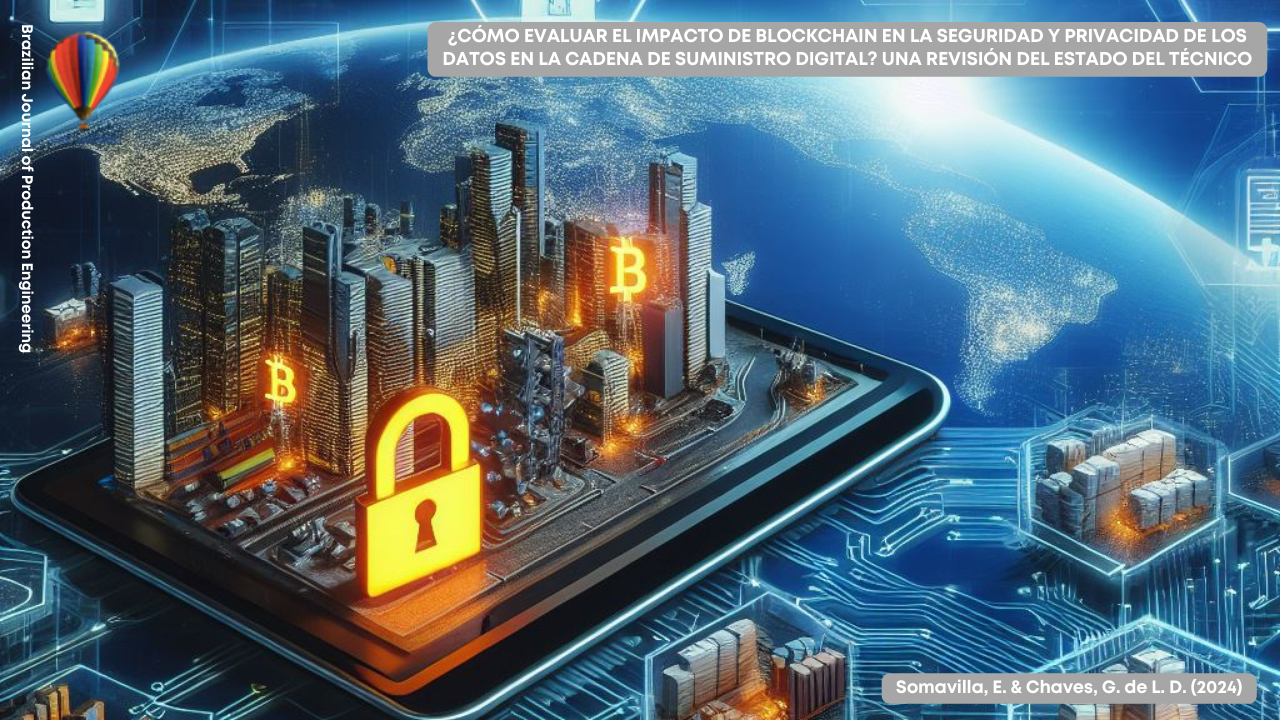
¿cómo evaluar el impacto de blockchain en la seguridad y privacidad de los datos en la cadena de suministro digital? Una revisión del estado del técnico
- Autores/as
-
-
Eliane Somavilla
Universidade Federal de Santa Catarina (UFSC)
Autor/a
-
Gisele de Lorena Diniz Chaves
Universidade Federal de Santa Catarina (UFSC)
Autor/a
-
- Palabras clave:
- Seguridad, Privacidad de Datos, Cadena de Suministro Digital, Indicadores, Mediciones
- Resumen
-
Las organizaciones de la Industria 4.0 y las Cadenas de Suministro Digital (CSD) tienen el desafío de mantener la privacidad y seguridad de los datos en sus sistemas debido a la ciberseguridad, la falta de gestión y confianza entre sus miembros, entre otros temas. En este escenario, Blockchain (BCK) surgió como una alternativa para mantener información descentralizada, segura y confiable para los participantes. Para verificar la efectividad de la adopción de BCK, se indican los requisitos clave que resumen los criterios que se deben considerar para medir diferentes aspectos que impactan la seguridad y privacidad de los datos en CSD. Posteriormente, a través de una revisión sistemática de la literatura publicada en los últimos 10 años, reforzada por la metodología PRISMA y la técnica de muestreo de bola de nieve, se identificaron los principales factores que deben ser evaluados, como constructos y medidas, los cuales se agrupan en elementos que representan lo que debe ser medido de alguna manera por la CDS. Así, se realiza una revisión del estado del arte del desempeño de BCK en CSD y se discuten las principales dificultades de medición y oportunidades de mejora.
- Biografía del autor/a
- Referencias
-
Aljabhan, B. & Obaidat, M. A. (2023). Privacy-Preserving BCK Framework for Supply Chain Management: Perceptive Craving Game Search. Sustainability. 1-23. https://doi.org/10.3390/su15086905
Aslam, J., Saleem, A., & Kim, Y. B. (2023). BCK-enabled supply chain management: integrated impact on firm performance and robustness capabilities. Business Process Management Journal, 29(6), 1680-1705. https://doi.org/10.1108/BPMJ-03-2023-0165
Balfaqih, H., Nopiah, Z. M., Saibani, N., & Al-Nory, M.T. (2026). Review of supply chain performance measurement systems: 1998-2015. Computers In Industry, 82, 135-150. https://doi.org/10.1016/j.compind.2016.07.002
Bhattacharya, R. & Bandyopadhyay, S. (2011). A review of the causes of bullwhip effect in a supply chain. The International Journal of Advanced Manufacturing Technology, 54(9-12), 1245-1261. https://doi.org/10.1007/s00170-010-2987-6
Bigini, G. Freschi V., & Lattanzi, E. (2020). A Review on BCK for the Internet of Medical Things: definitions, challenges, applications, and vision. Future Internet, 12(12), 1-16. https://doi.org/10.3390/fi12120208
Budak, A. & Çoban, V. (2021). Evaluation of the impact of BCK technology on supply chain using cognitive maps. Expert Systems with Applications, 184, 115455. https://doi.org/10.1016/j.eswa.2021.115455
Buntak, K., Kovačić, M., & Mutavdžija M. (2021). Measuring Digital Transformation Maturity of Supply Chain. Tehni?Ki Glasnik, 15(2), 199-204. https://doi.org/10.31803/tg-20200414191933
Chopra, S. & Meindl, P. (2011). Supply Chain Management: strategy, planning and operation. New York: Pearson Prentice Hall. 529 p.
Çikmak, S., Kantoglu, B., & Kirbaç, G. (2023). Evaluation of the effects of BCK technology characteristics on SCOR model supply chain perfor. International Journal of Logistics Research And Applications, 1-31. https://doi.org/10.1080/13675567.2023.2193736
Dolgui, A., Ivanov, D., & Sokolov, B. (2017). Ripple effect in the supply chain: an analysis and recent literature. International Journal of Production Research, 56(1-2), 414-430. https://doi.org/10.1080/00207543.2017.1387680
Eur-Lex, Access to European Union Law. Constituição (2016). General Data Protection Regulation. Brussels, 27 abr. 2016. Recuperado de https://eur-lex.europa.eu/eli/reg/2016/679/oj
Fares, N. & Lloret, J. (2023) Barriers to supply chain performance measurement during disruptions such as the COVID-19 pandemic. International Journal of Quality e Reliability Management, 40(5), 1316-1342. https://doi.org/10.1108/IJQRM-03-2022-0095
Frederico, G. F., Garza-Reyes, J. A., Anosike,A., & Kumar V. (2019). Supply Chain 4.0: concepts, maturity and research agenda. Supply Chain Management, 25(2), 262-282. https://doi.org/10.1108/SCM-09-2018-0339
Gökalp, E., Gökalp, M. O., & Çoban S. (2020). BCK-Based Supply Chain Management: understanding the determinants of adoption in the context of organizations. Information Systems Management, 39(2), 100-121. https://doi.org/10.1080/10580530.2020.1812014
Govindan, K., kannan, D., Jorgensen, T. B., & Nielse, T. S. (2022). Supply Chain 4.0 performance measurement: a systematic literature review, framework development, and empirical evidence. Transportation Research Part e: Logistics and Transportation Review, 164, 102725. https://doi.org/10.1016/j.tre.2022.102725
Hani, J. B. (2022). The influence of supply chain management practices on supply chain performance: the moderating role of information quality. Business, Management and Economics Engineering, 20(1), 152-171. https://doi.org/10.3846/bmee.2022.16597
Harding, K. (2014). Zotero. Journal of The Canadian Health Libraries Association / Journal de L'Association Des Bibliothèques de, 34(1), 41. https://doi.org/10.5596/c13-003.
Hellweg, F., Lechtenberg, S., Hellingrath, B., & Thomé, A. M. T. (2021). Literature Review on Maturity Models for Digital Supply Chains. Brazilian Journal of Operations e Production Management, 18(3), 1-12. https://doi.org/10.14488/BJOPM.2021.022
Hong, L. & Hales, D. N. (2021). BCK performance in supply chain management: application in BCK integration companies. Industrial Management e Data Systems, 121(9), 1969-1996. https://doi.org/10.1108/IMDS-10-2020-0598
Johnson, M. & Stevens, G. C. (2016) Integrating the Supply Chain... 25 years on. International Journal of Physical Distribution e Logistics Management. Online, p. 19-42. https://doi.org/10.1108/IJPDLM-07-2015-0175
Joshi, A., Kale, S., Chandel, S., & Pal, D. K. (2015). Likert Scale: explored and explained. British Journal Of Applied Science e Technology, 7(4), 396-403. https://doi.org/10.9734/BJAST/2015/14975
Jum’a, L. (2023). The role of BCK-enabled supply chain applications in improving supply chain performance: the case of jordanian manufacturing sector. Management Research Review, 46(10), 1315-1333. https://doi.org/10.1108/MRR-04-2022-0298
Kakhki, M. D. & Gargeya, V. B. (2019) Information systems for supply chain management: a systematic literature analysis. International Journal Of Production Research, v. 57, n. 15-16, p. 5318-5339. https://doi.org/10.1080/00207543.2019.1570376
Kamble, S. S. & Gunasekaran, A. (2019). Big data-driven supply chain performance measurement system: a review and framework for implementation. International Journal of Production Research, 58(1), 65-86. https://doi.org/10.1080/00207543.2019.1630770.
Kim, J. S. & Shin, N. (2019). The Impact of BCK Technology Application on Supply Chain Partnership and Performance. Sustainability, 11(21), 6181.
https://doi.org/10.3390/su11216181
Kopyto, M., Lechler, S., Gracht, H. A. V. D., & Hartmann, E. (2020). Potentials of BCK technology in supply chain management: long-term judgments of an international expert panel. Technological Forecasting And Social Change, 161, 120330.
https://doi.org/10.1016/j.techfore.2020.120330
Li, Z. P., Ceong, H. T., & Lee, S. J. (2021). The Effect of BCK Operation Capabilities on Competitive Performance in Supply Chain Management. Sustainability, 13(21), 12078. https://doi.org/10.1080/00207543.2015.1026614
Maestrini, V., Luzzini, D., Caniato, F., Maccarrone, P. e Ronchi, S. (2018). Measuring supply chain performance: a lifecycle framework and a case study. International Journal of Operations e Production Management, 38(4), 934-956. https://doi.org/10.1108/IJOPM-07-2015-0455
Mahdiraji, H. A., Yaftiyan, F., Kamardi, A. A. A., Garza-Reyes, J. A., & Hajiagha, S. H. R (2022). The role of Industry 4.0 technologies on performance measurement systems of supply chains during global pandemics: an interval-valued intuitionistic hesitant fuzzy approach. International Journal of Quality e Reliability Management, 40(5), 1147-1171. https://doi.org/10.1108/IJQRM-03-2022-0094
Mangla, S. K., Kusi-Sarpong, S., Luthra, S., Bai, C., Jakhar, S. K., & Khan, S. A. (2020). Operational excellence for improving sustainable supply chain performance. Resources, Conservation and Recycling, 162, 105025. https://doi.org/10.1016/j.resconrec.2020.105025
Marinagi, C., Reklitis, P., Trivellas, P., & Sakas D. (2023). The Impact of Industry 4.0 Technologies on Key Performance Indicators for a Resilient Supply Chain 4.0. Sustainability, 15(6), 5185. https://doi.org/10.3390/su15065185
Melnyk, S. A., Schoenherr,T., Speier-Pero,C., Peters, C., Chang, J. F., & Friday, D. (2021). New challenges in supply chain management: cybersecurity across the supply chain. International Journal of Production Research, 60(1), 162-183. https://doi.org/10.1080/00207543.2021.1984606
Merrad, Y., Habaebi, M. H., Elsheikh, E. A. A., Suliman, F. E. M., Islam, M. R., Gunawan, T. S., & Mesri, M. (2022). BCK: consensus algorithm key performance indicators, trade-offs, current trends, common drawbacks, and no. Mathematics, 10(15), 2754. https://doi.org/10.3390/math10152754
Moher, D., Liberati, A., Tetzlaff, J., & Altman,D. G. (2010). Preferred reporting items for systematic reviews and meta-analyses: The PRISMA statement. International Journal of Surgery, 8, 336-341. https://doi.org/10.1371/journal.pmed.1000097
Naderifar, M., Goli, H., & Ghaljaie, F. (2017). Snowball Sampling: A Purposeful Method of Sampling in Qualitative Research. The Strides in Development Of Medical Education Journal, 14, 1-4. https://doi.org/10.5812/sdme.67670
Oláh, J., Krisán, E., Kiss, A., Lakner, Z., & Popp J. (2020). PRISMA Statement for Reporting Literature Searches in Systematic Reviews of the Bioethanol Sector. Energies, 13(9), 2323. https://doi.org/10.3390/en13092323
Patidar, A., Sharma, M., Agrawal, R., & Sangwan, K.S. (2022). Supply chain resilience and its key performance indicators: an evaluation under industry 4.0 and sustainability perspective. Management of Environmental Quality: An International Journal, 34(4), 962-980. https://doi.org/10.1108/MEQ-03-2022-0091
Piurcosky, F. P., Calegário, C., Costa, M., & Frogeri, R. F. (2019). A lei geral de proteção de dados pessoais em empresas brasileiras: uma análise de múltiplos casos. Suma de Negocios, 10(23), 89-99. http://dx.doi.org/10.14349/sumneg/2019.V10.N23.A2
Prisma Statement. (2023). Home. Recuperado de: http://www.prisma-statement.org/
Queiroz, M. M., Pereira, S. C. F., Telles, R., & Machado, M. C. (2019). Industry 4.0 and digital supply chain capabilities. Benchmarking: An International Journal, 28(5), 1761-1782. https://doi.org/10.1108/BIJ-12-2018-0435
Roever, L. (2020). Guia prático de revisão sistemática e metanálise. Rio de Janeiro: Thieme Revinter. 86 p.
Ronaghi, M. H. (2022). Contextualizing the impact of BCK technology on the performance of new firms: the role of corporate governance as an intermediate outcome. The Journal of High Technology Management Research, 33(2), 100438-100451. https://doi.org/10.1016/j.hitech.2022.100438
Sammarco, G., Ruzza, D., Vishkaei, B. M., & De Giovanni, P. (2022). The Impact of Digital Technologies on Company Restoration Time Following the COVID-19 Pandemic. Sustainability, 14(22), 15266. https://doi.org/10.3390/su142215266
Silvestre, B. S., Monteiro, M. S., Viana, F. L. E., & Filho, J. M. de S. (2018). Challenges for sustainable supply chain management: when stakeholder collaboration becomes conducive to corruption. Journal of Cleaner Production, 194, 766-776. https://doi.org/10.1016/j.jclepro.2018.05.127
Supply Chain Council – SCC. (2023). Supply Chain Operations Reference Model SCOR, 12. United States of America.
Tambaré, P., Meshram, C., Lee, C. C., Ramteke, R. J., & Imoize, A. L. (2021). Performance Measurement System and Quality Management in Data-Driven Industry 4.0: a review. Sensors, 22(1), 224-249. https://doi.org/10.3390/s22010224
Tokkozhina, U., Martins, A. L., & Ferreira, J. C. (2020). Use of BCK Technology to Manage the Supply Chains: Comparison of Perspectives between Technol. Journal of Theoretical and Applied Electronic Commerce Research. 1616-1632. https://doi.org/10.3390/jtaer17040082
Weerabahu, W. M. S., K. Samaranayake, P., Nakandala, D., & Hurriyet, H. (2022). Digital supply chain research trends: a systematic review and a maturity model for adoption. Benchmarking, 29, 3040-3066. https://doi.org/10.1108/BIJ-12-2021-0782
- Cover Image
-
- Descargas
- Publicado
- 2024-05-08
- Número
- Vol. 10 Núm. 2 (2024): Edición regular (abril - junio) *Artículos de publicación Flujo continuo*
- Sección
- INGENIERÍA ORGANIZACIONAL
- Licencia
-
Derechos de autor 2024 Brazilian Journal of Production Engineering

Esta obra está bajo una licencia internacional Creative Commons Atribución 4.0.
Todas las obras publicadas en la Revista Brasileña de Ingeniería de Producción (BJPE) están bajo la licencia Creative Commons Atribución 4.0 Internacional (CC BY 4.0). Esto significa que: Cualquier persona puede copiar, distribuir, exhibir, adaptar, remezclar e incluso utilizar comercialmente el contenido publicado en la revista; Siempre que se reconozca debidamente a los autores y a BJPE como fuente original; No se requiere permiso adicional para la reutilización, siempre que se respeten los términos de la licencia. Esta política cumple con los principios de acceso abierto, promoviendo la amplia difusión del conocimiento científico. 🔗 Haga clic aquí para acceder a la licencia completa.
