

2.png)




































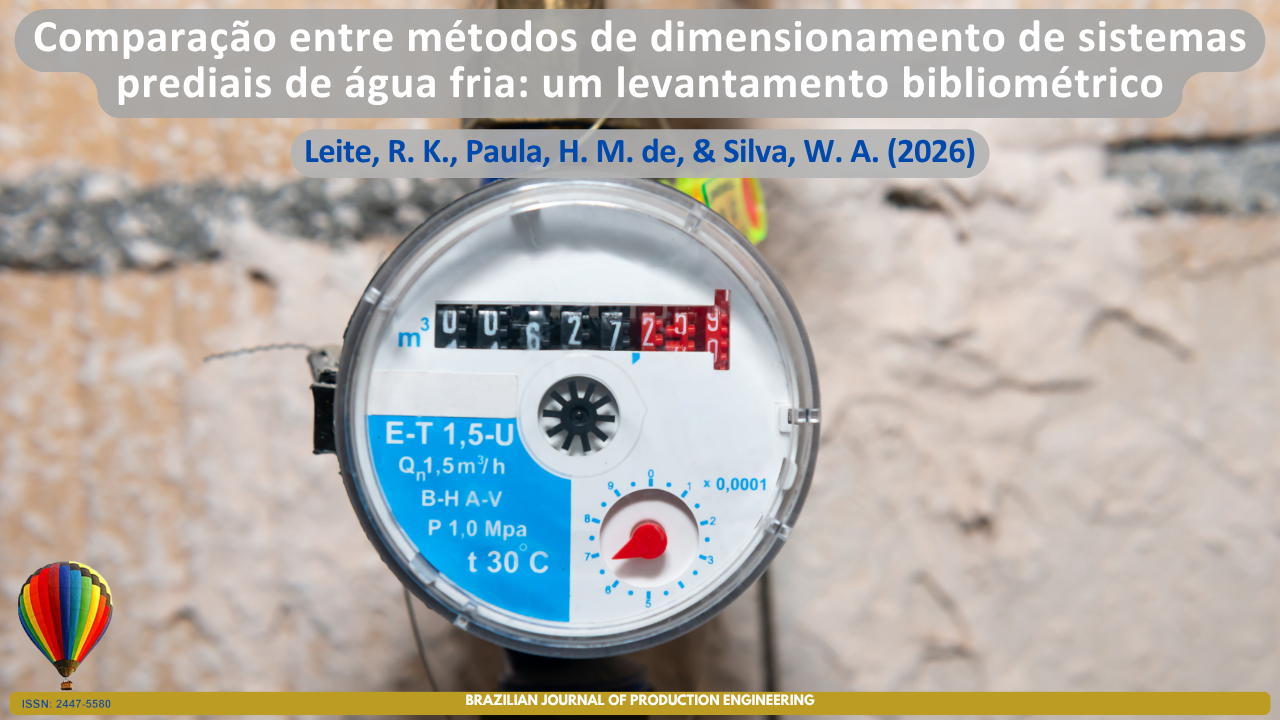
Comparação entre métodos de dimensionamento de sistemas prediais de água fria: um levantamento bibliométrico
- Autores
-
-
Autor
-
Heber Martins de Paula
Universidade Federal de Catalão - UFCAT
Autor
-
Wellington Andrade da Silva
Universidade Federal de Catalão - UFCAT
Autor
-
- Palavras-chave:
- Água fria, Vazão de projeto, Modelos de dimensionamento
- Resumo
-
Mesmo com a atualização da NBR 5626 em 2020, o dimensionamento dos Sistemas Prediais de Água Fria (SPAF), majoritariamente, ainda é feito por métodos empíricos, em especial, pelo método dos pesos método alemão. O presente artigo apresenta um mapeamento sistemático da literatura, cujo objetivo é identificar e consolidar as principais tendências e desafios acerca dos modelos de dimensionamento de SPAF. O método empregado para o levantamento qualitativo e quantitativo de publicações até o ano de 2025 seguem as diretrizes do Parsifal, que se trata de uma ferramenta on-line para a análise de dados e pesquisas. E, de acordo com o estudo realizado, foi possível chegar a resultados que comprovam a grande tendência das pesquisas ao redor do mundo sobre os novos métodos de dimensionamento que, mesmo sendo mais complexos, do ponto de vista matemático, conclui-se que eles geram vazões reais menores, de 25 a 63% e por conseguinte uma maior economia ao cliente final.
- Biografia do Autor
- Referências
-
Associação Brasileira de Normas Técnicas. ABNT. (2020). Projeto, execução, operação e manutenção de sistemas prediais de água fria. NBR 5626. Rio de Janeiro: ABNT. Recuperado de https://normadedesempenho.com.br/wp-content/uploads/2022/10/NBR-5626-2020.pdf
Bailey, J., Budgen, D., Turner, M, Kitchenham, B, Brereton, P., & Linkmon, S. (2007). Evidence relating to object oriented software design: a survey. First International Symposium on Empirical Software Engineering and Measurement. Madrid, Spain: IEEE. https://doi.org/10.1109/ESEM.2007.58
Cortez-Lara, P., Gress, E. S. H., Ballinas-Gonzalez, R., & Sanchez, B. (2024). A methodology to simulate peak water demand for water supply systems using semi-direct methods: a case study for a residential building in Mexico. Heliyon. 10(3e25104).https://doi.org/10.1016/j.heliyon.2024.e25104
Hobbs, I., Anda, M., & Bahri, P. A. (2019). Estimating peak water demand: literature review of current standing and research challenges. Results in Engineering, 4, 100055. https://doi.org/10.1016/j.rineng.2019.100055
Hunter, R. (1940) Methods of estimating loads in plumbing systems report BMS65, National Bureau of Standards, USA.
Josey, B. M. & Gong, J. (2024). The impact of building occupancy on water demand characteristics in residential buildings: a sensitivity analysis. Eng. Proc., 69(1), 119. https://doi.org/10.3390/engproc2024069119
Josey, B. M. & Gong, J. (2023). Determination of fixture-use probability for peak water demand design using high-level water end-use statistics and stochastic simulation. Journal of Water Resources Planning and Management. 149(11). https://doi.org/10.1061/JWRMD5.WRENG-6146
Josey, B. M. & Gong, J. (2025). Comparing the hydraulic performance of cold-water premise plumbing systems designed based on traditional and modern peak demand estimates. Journal of Water Resources Planning and Management. 151(8). https://doi.org/10.1061/JWRMD5.WRENG-6768
Konen, T. P. & Brady Jr., P. M. (1974). A review of the parameters in the Hunter model for estimating the demand for water supply and drainage. In: W062 - Proceedings of the 3th International Symposium on Water Supply and Drainage for Buildings. Hørsholm, Dinamarca: CIB W062 - Water Supply and Drainage.
Mangalekar, R. & Gumaste, K. (2023). FIS-based approach to estimate probable flows for sizing pipes in building water supply systems. Urban Water Journal, 20(2), 1-12. https://doi.org/10.1080/1573062X.2022.2155853
Mangalekar, R. D. & Gumaste, K. S. (2021). Residential water demand modelling and hydraulic reliability in design of building water supply systems: a review. Water Supply, 21(4), 1385-97. https://doi.org/10.2166/ws.2021.021
Morais, L. S. R. de, Fioramonte, B., Leite, R. K., Paula, H. M. de, & Reis, R. P. A. (2023). Dimensionamento de sistemas prediais de distribuição de água: um estudo bibliográfico. Paranoá, 6(34), 1-24. https://doi.org/10.18830/issn.1679-0944.n34.2023.05
Mui, K. W., Wong, L, T., Yeung, M. K., & Hui, P. S. (2007). Demand analysis of fresh water supply for a Chinese restaurant. In: International Symposium CIB W062, 33th, 2007, Brno, Czech Republic. Proceedings… Brno: Brno University of Technology, p. 61-70.
Oliveira, L. H., Cheng, L. Y., Gonçalvez, O. M., & Massolino, P. M. C. (2009). Application of fuzzy logic to the assessment of design flow rate in water supply system of multifamily building. In: International Symposium CIB W062, 35th, 2009, Düsseldorf, Germany. Proceedings… Düsseldorf: Fachhochschule Gelsenkirchen, University of Applied Sciences, p. 39-54.
Omaghomi, T., Buchberger, S., Cole, D., Hewitt, J., & Wolfe, T. (2020). Probability of water fixture use during peak hour in residential buildings. Journal of Water Resources Planning and Management, 146(5). https://doi.org/10.1061/(ASCE)WR.1943-5452.0001207
Petersen, K., Feldt, R., Mujtaba, S., & Mattsson, M. (2008). Systematic mapping studies in software engineering. School of Engineering, Blekinge Institute of Technology. University of Bari, Italy.
Wistort, R. (1994). A new look at determining water demand in buildings: ASPE direct analytical method. In: American Society of Plumbing Engineers Convention. Kansas City, Missouri: American Society of Plumbing Engeneers.
Pieterse-Quirjins, E. J., Blokker, M., Vreeburg, Jr. J. H. G., & Blom, E. V. D. (2012). Modelling characteristic values for non-residential water demand. Proceedings, Water Distribution Systems Analysis. https://doi.org/10.1061/41203(425)111
Wong, L. T. & Mui, K. W. (2017). Bridging the gap between model estimates and field measurements of probable maximum simultaneous demand: a Bayesian approach. In: International Symposium CIB W062, 43th. Haarlem, Netherlands. Proceedings…, p. 25-31.
Wong, L. T. & Mui, K. W. (2007). Modeling water consumption and flow rates for flushing water systems in high-rise residential buildings in Hong Kong. Building and Environment, 42(5), 2024-34. https://doi.org/10.1016/j.buildenv.2006.02.018
- Cover Image
-
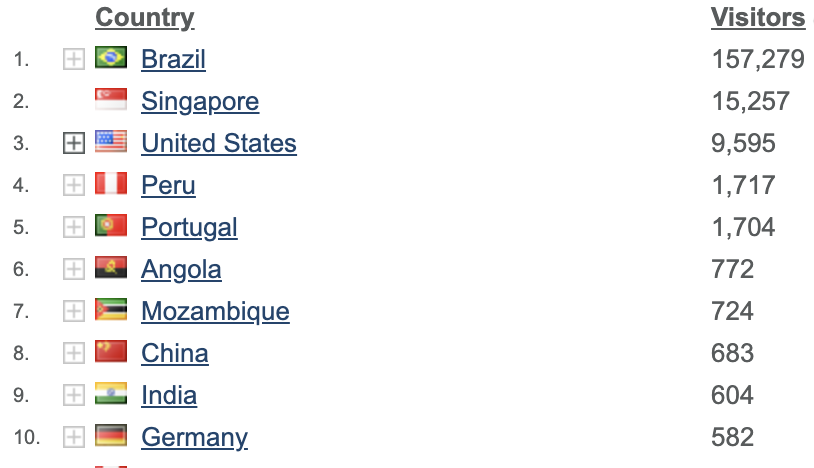
- Downloads
- Arquivos adicionais
- Publicado
- 25.06.2026
- Seção
- ENGENHARIA CIVIL, DESIGN E ARQUITETURA
- Licença
-
Direitos autorais (c) 2026 Leite, R. K., Paula, H. M. de, & Silva, W. A.

Este trabalho está licenciado sob uma licença Creative Commons Attribution 4.0 International License.
Qualquer pessoa pode copiar, distribuir, exibir, adaptar, remixar e até utilizar comercialmente os conteúdos publicados na revista; Desde que sejam atribuídos os devidos créditos aos autores e à BJPE como fonte original; Não é exigida permissão adicional para reutilização, desde que respeitados os termos da licença. Esta política está em conformidade com os princípios do acesso aberto, promovendo a ampla disseminação do conhecimento científico. 🔗 CC BY 4.0
