

2.png)




































Modelos de previsão de impactos ambientais com inteligência artificial: uma revisão bibliométrica
- Autores
-
-
Autor
-
Autor
-
Autor
-
- Resumo
-
Este estudo examina a evolução da produção científica internacional sobre modelos de previsão de impactos ambientais baseados em algoritmos de Inteligência Artificial, com ênfase em técnicas de Machine Learning-ML aplicadas ao contexto das mudanças climáticas. O objetivo foi mapear tendências, identificar lacunas e avaliar a consolidação desse campo, considerando seu potencial de integração com métricas de sustentabilidade. A pesquisa utilizou métodos bibliométricos a partir de 631 artigos indexados na Web of Science entre 1945-2023, analisados com o pacote Bibliometrix no software R. Os resultados indicam crescimento exponencial das publicações a partir de 2016, acompanhado pela predominância de China, EUA e Índia tanto em volume quanto em influência científica. A aplicação das Leis de Bradford e Lotka revelou forte concentração da produção em poucos periódicos e elevada fragmentação autoral. A análise temática mostrou que machine learning, climate change e prediction models constituem os temas motores do campo, embora ainda focados em variáveis ambientais isoladas. Constatou-se ausência de modelos integrados que articulem previsões ambientais, impactos socioeconômicos e dimensões de governança, bem como inexistência de conexões sistemáticas entre técnicas de IA e indicadores ESG. Conclui-se que essa integração constitui uma fronteira promissora para pesquisas futuras e para a formulação de estratégias de sustentabilidade.
- Biografia do Autor
- Referências
-
Adisa, O. M., Masinde, M., Botai, J. O., & Botai, C. M. (2020). Bibliometric analysis of methods and tools for monitoring and forecasting droughts in Africa. Sustainability, 12(16), 6516. https://doi.org/10.3390/su12166516
Al-Abassi, A., Karimipour, H., Haddadpajouh, H., Dehghantanha, A., & Parizi, R. M. (2020). Industrial big data analytics: challenges and opportunities. In Handbook of Big Data Privacy (37-61). Springer. https://doi.org/10.1007/978-3-030-38557-6_3
Anderegg, W. R. L., Prall, J. W., Harold, J., & Schneider, S. H. (2010). Expert credibility on climate change. Proceedings of the National Academy of Sciences, 107(27), 12107-09. https://doi.org/10.1073/pnas.1003187107
Aria, M. & Cucurullo, C. (2017). Bibliometrix: an R tool for comprehensive science mapping analysis. Journal of Informetrics, 11(4), 959-975. https://doi.org/10.1016/j.joi.2017.08.007
Banihashemi, S., Ding, G., & Wang, J. (2017). Developing a hybrid model of prediction and classification algorithms for building energy consumption. Energy Procedia, 110, 371-376. https://doi.org/10.1016/j.egypro.2017.03.155
Belayneh, A., Adamowski, J., & Khalil, B. (2015). Short-term SPI drought forecasting in the Awash River Basin, Ethiopia, using wavelet transforms and machine learning methods. Sustainable Water Resources Management, 2, 87-101. https://doi.org/10.1007/s40899-015-0010-2
Bornmann, L. (2016). Bibliometrics in climate change research: A perspective from bibliometric indicators. PLoS ONE, 11(7), e0157650. https://doi.org/10.1371/journal.pone.0157650
Brookes, B. C. (1969). Bradford’s law and the bibliography of science. Nature, 224, 953-6. https://doi.org/10.1038/224953a0
Buarque, S. C. (2003). Metodologia e técnicas de construção de cenários globais e regionais. IPEA.
Cobo, M. J., López-Herrera, A. G., Herrera-Viedma, E., & Herrera, F. (2011). An approach for detecting, quantifying, and visualizing the evolution of a research field: a practical application to the fuzzy sets theory field. Journal of Informetrics, 5(1), 146-66. https://doi.org/10.1016/j.joi.2010.10.002
Ferreira, A. L., Marton, F., & Perez, G. (2022). Cybersecurity in services: a bibliometric study. Journal of Professional Master’s Degrees, 11(2). https://doi.org/10.51359/2317-0115.2022.256796
Gleckler, P. J., Taylor, K. E., & Doutriaux, C. (2008). Performance metrics for climate models. Journal of Geophysical Research: Atmospheres, 113, D06104. https://doi.org/10.1029/2007JD008972
Gosling, N. W. & Arnell, N. (2016). A global assessment of the impact of climate change on water scarcity. Climatic Change, 134, 371-85. https://doi.org/10.1007/s10584-013-0853-x
Greco, D. (2017). Modelos preditivos: o que são e para que servem. Análise de Dados. https://marketingpordados.com/2017/05/10/
Grieneisen, M. L. & Zhang, M. (2011). The current status of climate change research. Nature Climate Change, 1(2), 72-3. https://doi.org/10.1038/nclimate1093
Guresen, E., Kayakutlu, G., & Daim, T. U. (2011). Using artificial neural network models in stock market index prediction. Expert Systems with Applications, 38, 10389-97. https://doi.org/10.1016/j.eswa.2011.02.068
Haunschild, R., Bornmann, L., & Marx, W. (2016). Climate change research in view of bibliometrics. PLoS ONE, 11(7), e0157649. https://doi.org/10.1371/journal.pone.0157649
Hughes, L. (2003). Climate change and Australia: trends, projections and impacts. Austral Ecology, 28, 423-43. https://doi.org/10.1046/j.1442-9993.2003.01300.x
Hussin, F., Rahim, S. A. N. M., Hatta, N. S. M., Aroua, M. K., & Mazari, S. A. (2023). A systematic review of machine learning approaches in carbon capture applications. Journal of CO₂ Utilization, 71. https://doi.org/10.1016/j.jcou.2023.102474
IPCC. (2014). Climate change 2014: synthesis report. Summary for Policymakers. Intergovernmental Panel on climate change. https://www.ipcc.ch/pdf/assessment-report/ar5/syr/AR5_SYR_FINAL_SPM.pdf
Laniak, G. F. et al. (2013). Integrated environmental modeling: A vision and roadmap for the future. Environmental Modelling & Software, 39, 3-23. https://doi.org/10.1016/j.envsoft.2012.09.006
Li, J. F., Wang, M. H., & Ho, Y. S. (2011). Trends in global climate change research. Global and Planetary Change, 77(1-2), 13-20. https://doi.org/10.1016/j.gloplacha.2011.02.005
Li, W. & Zhao, Y. (2015). Bibliometric analysis of global environmental assessment research. Environmental Impact Assessment Review, 50, 158-66. https://doi.org/10.1016/j.eiar.2014.09.012
Liu, Y., Esan, O. C., Pan, Z., & An, L. (2021). Machine learning for advanced energy materials. Energy and AI, 3. https://doi.org/10.1016/j.egyai.2021.100049
Miyano, T. & Girosi, F. (1994). Forecasting global temperature variations by neural networks (Technical Report). MIT, Artificial Intelligence Laboratory.
Müller, V. C. & Bostrom, N. (2016). Future progress in artificial intelligence: A survey of expert opinion. In V. C. Müller (Ed.), Fundamental issues of artificial intelligence (553-71). Springer. https://doi.org/10.1007/978-3-319-26485-1_33
Okubo, Y. (1997). Bibliometric indicators and analysis of research systems: Methods and examples. OECD.
Penland, C. & Matrosova, L. (1998). Prediction of tropical Atlantic sea surface using linear inverse modeling. Journal of Climate, 11, 483-96. https://doi.org/10.1175/1520-0442(1998)011‹0483:POTASS›2.0.CO;2
Roesch, I. & Günther, T. (2018). Visualization of neural network predictions for weather forecasting. Computer Graphics Forum, 38, 209-20. https://doi.org/10.1111/cgf.13403
Rodrigues, C. & Godoy, A. F. G. (2016). Bibliometric studies on the scientific production of information and communication technologies in libraries. InCID: Revista de Ciência da Informação e Documentação, 7(1), 167-80. https://doi.org/10.11606/issn.2178-2075.v7i1p167-180
Sembay, M., Luiz Pinto, A., de Macedo, D. J., & Moreiro-González, J. A. (2020). Aplicación de la Ley de Bradford a la investigación sobre open government. Anales de Documentación, 23(1). https://doi.org/10.6018/analesdoc.326771
Smith, D. M., Cusack, S., Colman, A. W., Folland, C. K., Harris, G. R., & Murphy, J. M. (2007). Improved prediction of surface temperature for the next decade from a global climate model. Science, 317, 796-99.
Su, H. & Lee, P. (2010). Mapping knowledge structure by keyword co-occurrence. Scientometrics, 85(1), 65-79. https://doi.org/10.1007/s11192-010-0252-8
Tanure, T. M. P., et al. (2020). The impacts of climate change on agricultural production, land use and economy of the Legal Amazon region between 2030 and 2049. Economia Aplicada, 21, 73-90. https://doi.org/10.11606/1980-5330/ea162093
Thai, H.-T. (2022). Machine learning for structural engineering: A state-of-the-art review. Structures, 38, 448–91. https://doi.org/10.1016/j.istruc.2022.02.003
Thompson, D. F. & Walker, C. K. (2015). A descriptive and historical review of bibliometrics with applications to the medical sciences. Pharmacotherapy, 35(6), 551-59. https://doi.org/10.1002/phar.1582
Tol, R. S. (2002). Estimates of the damage costs of climate change. Part 1: Baseline estimates. Environmental and Resource Economics, 21, 47-73. https://doi.org/10.1023/A:1014500930521
Urbizagastegui, R. (2008). The productivity of authors on Lotka’s Law. Ciência da Informação, 37(2), 87-102. https://doi.org/10.1590/S0100-19652008000200008
Wibisono, A. et al. (2016). Traffic big data prediction and visualization using fast incremental model trees-drift detection. Knowledge-Based Systems, 93, 33-46. https://doi.org/10.1016/j.knosys.2015.11.017
Wolpert, D. H. (1996). The lack of a priori distinctions between learning algorithms. Neural Computation, 8(7), 1341-90. https://doi.org/10.1162/neco.1996.8.7.1341
Yan, Y. et al. (2021). Harnessing the power of machine learning for carbon capture, utilization, and storage (CCUS). Energy & Environmental Science, 14(12), 6122-57. https://doi.org/10.1039/D1EE02395K
Zaihong, Z., Zhiqiang, D., & Rusch, K. A. (2012). Development of predictive models for determining enterococci levels at Gulf Coast beaches. Water Research, 46(2), 481-92. https://doi.org/10.1016/j.watres.2011.11.050
Zarur, M. A. F. (2000). Modelo para elaboração de cenários do setor energético, utilizando técnicas de data mining (Mestrado). Universidade Federal do Rio de Janeiro.
Zhu, D. et al. (1999). A process for mining science & technology documents databases. Ciência da Informação, 28(1), 7-20. https://doi.org/10.1590/S0100-19651999000100002
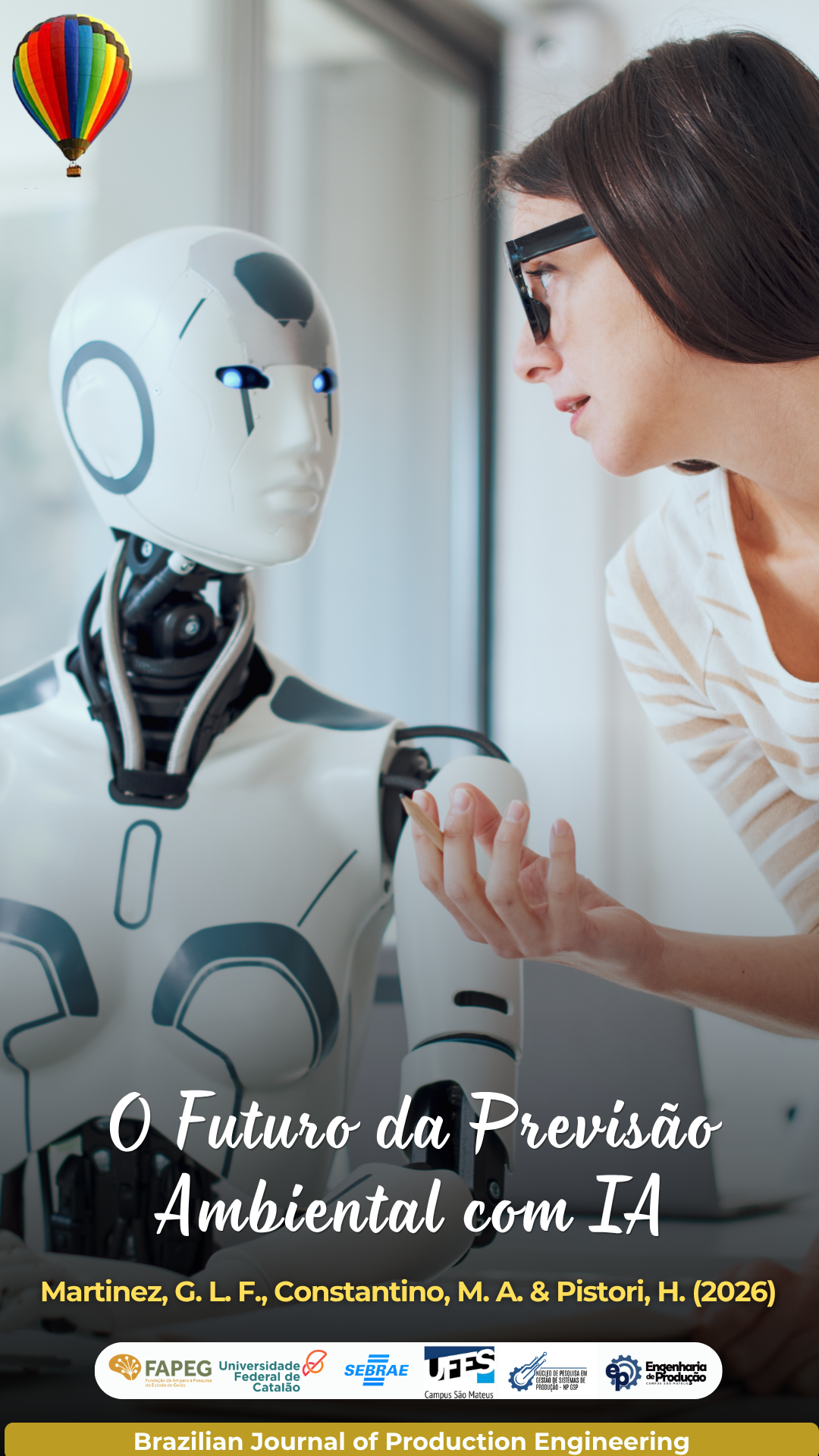
- Cover Image
-
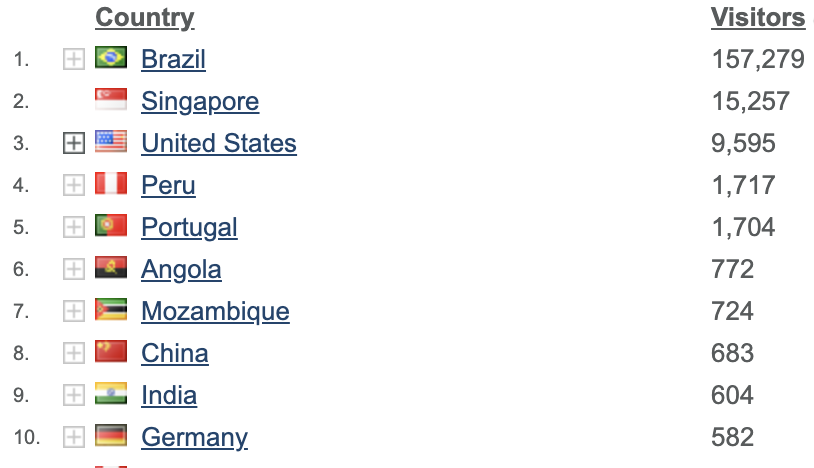
- Downloads
- Publicado
- 20.07.2026
- Seção
- Inovação, Sustentabilidade e Empreendedorismo: Caminhos para a Transformação da Engenharia de Produção
- Licença
-
Direitos autorais (c) 2026 Martinez, G. L. F., Constantino, M. A. & Pistori, H.

Este trabalho está licenciado sob uma licença Creative Commons Attribution 4.0 International License.
Qualquer pessoa pode copiar, distribuir, exibir, adaptar, remixar e até utilizar comercialmente os conteúdos publicados na revista; Desde que sejam atribuídos os devidos créditos aos autores e à BJPE como fonte original; Não é exigida permissão adicional para reutilização, desde que respeitados os termos da licença. Esta política está em conformidade com os princípios do acesso aberto, promovendo a ampla disseminação do conhecimento científico. 🔗 CC BY 4.0
