Ethnogeographic approach to artisanal fishingin the Río Negro – Uruguay
DOI:
https://doi.org/10.47456/geo.v5i41.48180Keywords:
ethnogeography, territorialities, artisanal fishingAbstract
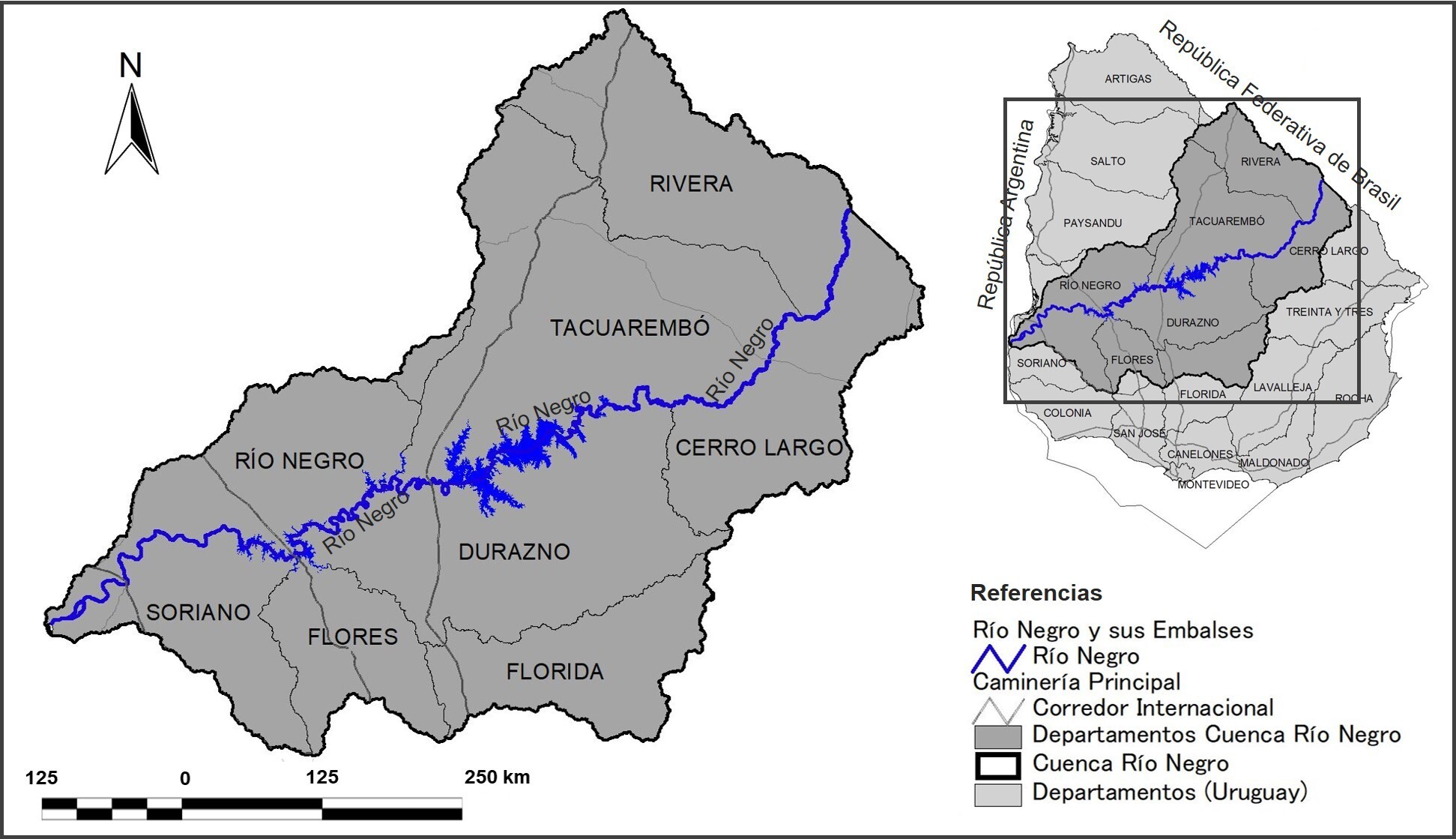
Ethnogeography is a field of study that examines how human cultures interact with their geographic environments, analyzing the perceptions, uses, and meanings people attribute to a particular territory. This approach is applied to the study of artisanal fishing in the Río Negro, Uruguay, highlighting the social construction of the territory and the importance of local knowledge in the relationships between communities and the environment. The research draws on ethnogeographic fieldwork, analysis of local narratives, and historical investigation to examine the territorialities of artisanal fishing groups. The findings are organized into four dimensions: family and personal, socioeconomic and cultural, environmental and resource management, and the future of fishing. Results reveal that artisanal fishing is a family legacy central to the identity of fishers, despite persistent challenges such as environmental degradation, declining income, and the difficulty of transmitting knowledge to younger generations. Fishing communities demonstrate remarkable resilience and adaptability, continually seeking to achieve sustainability and protection of the ecosystems on which their lives and culture depend.
Downloads
References
ALBAGLI, S. Território e territorialidade. Territórios em movimento: cultura e identidade como estratégia de inserção competitiva. Rio de Janeiro: Relume Dumará, 23-69. 2004
ALMEIDA, M. G. Uma Leitura Etnogeográfica do Brasil Sertanejo. In: SERPA, Ângelo. (Org.) Espaços Culturais: vivências, imaginações e representações. Salvador: Edufba. 313-336, 2008.
ANJOS, R. S. A. Quilombos: Geografia africana – Cartografia étnica, territórios tradicionais. Brasília: Mapas Editora & Consultoria, 200, 2009.
BANDIERI, S. LA HISTORIA EN PERSPECTIVA REGIONAL: Aportes conceptuales y avances empíricos¹. Revista de historia americana y argentina, 52(1), 11-30, 2017
BLAUT, J. M. Some principles of ethnogeography. En Philosophy in geography. Dordrecht: Springer Netherlands, 1-7, 1979.
BRANDÃO, C. R. Participar-pesquisar. IN: BRANDÃO, C. R (Org.). Repensando a pesquisa participante. 3ª Edição. São Paulo: Ed. Brasiliense, 7-14, 1987
BRUNET, R. Le territoire dans les turbulences, Montpellier, France, Reclus, 1990
BRUNHES, J. Etnographie et géographie humaine, L’Ethnographie, I, 15, octobre, 29-40, 1913
CARDOSO, E. S. Da apropriação da natureza à construção de territórios pesqueiros. GEOUSP-Espaço e tempo. São Paulo (14), 119-125, 2003
CHAMBERS, R. Participatory Rural Appraisal (PRA): analysis of experience. World Development, Grã Bretanha, v. 22, n. 9, 1253-1268, 1994.
CHAMBERS, R; GUIJT, I. DRP: Depois de cinco anos, como estamos agora? Tradução de Maria Ruth Takahashi e Marcos Affonso Ortiz Gomez. Revista Bosques, Árvores e Comunidades Rurais, Quito/ Equador, n. 26, p. 04-15, 1995.
CLAVAL, P. “A volta do cultural” na Geografia. Mercator – Revista de Geografia da UFC, Fortaleza, ano1, n.01, 19-28, 2002.
CLAVAL, P. Epistemologia da geografia. Tradução: Margareth de Castro Afeche Pimenta e Joana Afeche Pimenta. 2. ed. rev. Florianópolis: Ed. da UDSC, 2014.
CLAVAL, P. Etnogeografias - Conclusão. Espaço e Cultura, UERJ-RJ. n. 7, jan./jun 69-74, 1999.
CLAVAL, P. Terra dos Homens: A Geografia uma apresentação. GEOUSP, Espaço e Tempo, São Paulo, n.29, 80-86, 2011.
CLAVAL, P. TERRA DOS HOMENS: a geografia. Tradução Domitila Madureira. 1ª Edição. 2ª Reimpressão. São Paulo: Contexto, 143, 2015.
CLIFFORD, J. The predicament of culture: Twentieth-century ethnography, literature, and art. Harvard University Press, 1988.
COOKE, F. M. “Maps and counter-maps: Globalised imaginings and local realities of Sarawak’s plantation agriculture”, en Journal of Southeast Asian Studies, n° 34(2), 265-284, 2003
COSGROVE, D. A Geografia Está em Toda Parte: Paisagem e Simbolismo na Geografia Humana. Paisagem, Tempo e Cultura. Rio de Janeiro: EdUERJ. 93-122, 1998.
DE BARROS-MOTT, L. R. SERENO, P. L'etno-geografia. In: Études rurales, n. 69,. 127-128, 1978
DE LA BLACHE VIDAL, P. Princípios de geografia humana. Lisboa: Cosmos, 1954
DETIENNE, M. La invención de la mitología, traducción de Marco Aurelio Galmarini, Barcelona: Península, 1985
FARIA, A; FERREIRA NETO, P. Ferramentas de diálogo: qualificando o uso das técnicas de DRP/ Diagnóstico Rural Participativo. Brasília: Ministério do Meio Ambiente/ Instituto Internacional da Educação no Brasil, 76, 2006.
FEATHERSTONE, M. “Global and Local Cultures”, en: Bird J. et al., Mapping the Futures: Local Cultures, Global Change, Routledge, 1993.
FEBVRE, L. "L'homme et la terre: nature de la géographie humaine". Annales de géographie, 57(301), 241-262, 1948
FUTEMMA, C.R.T.; SEIXAS, C. Há territorialidade na pesca artesanal da Baía de Ubatumirim (Ubatuba, SP)? Questões intra, inter e extra-comunitárias. Biotemas. v.1, n.21, 125-138, 2008.
GOMES, K. C., FARIAS, D. S., & ALMEIDA, A. W. B. Indigenous territorial management and ethnogeography in the Eastern Amazon. Journal of Ethnobiology and Ethnomedicine, 14(1), 1-11, 2018.
GOUROU, P. Les pays tropicaux (principes d’une géographie humaine et économique). 5ème ed. Paris, Presses Universitaires de France, Collection Pays d’Outre-Mer, 1969
HAESBAERT, R. Região e regionalização num mundo des-territorializado. O urbano e o regional no Brasil contemporâneo: mutações, tensões, desafios. Salvador: EDUFBA, 37-58, 2007.
HAESBAERT, R. Del mito de la desterritorialización a la multiterritorialidad. Cultura y representaciones sociales, 8(15), 9-42, 2013.
HAESBAERT, R. Des-territorialização e identidade – a rede “gaúcha” no nordeste, EDUFF, Niteroi, 1997.
HARVEY, D. W. Explanation in geography, Edward Arnold, London, 1969.
LA BLACHE, P. V. As características próprias da Geografia. Tradução de Odete Sandrini Mayer. Transcrito dos Annales de Geographie, 22 (124): 289-299, 1913. In: CHRISTOFOLETTI, Antônio. Perspectivas da Geografia. 2ª Ed. São Paulo: DIFEL, 37-47, 1985.
LEFF, E. Epistemologia ambiental. Tradução: Sandra Valenzuela. São Paulo: Cortez, 2010.
LEY, D. Social geography and the taken-for-granted world. In Philosophy in geography. Dordrecht: Springer Netherlands, 215-236, 1979.
LOWENTHAL, D. Geografia, experiência e imaginação: em direção a uma epistemologia geográfica. In: CHRISTOFOLETTI, Antônio. Perspectivas da Geografia. 2ª Ed. São Paulo: DIFEL, 103-141, 1985.
MACEDO, R. S. Etnopesquisa crítica - Etnopesquisa formação. 2 Ed. Brasília: Liber Livro Editora, 179, 2010.
MARANDOLA J.R.E. Da existência e da experiência: origens de um pensamento e de um fazer. Caderno de Geografia, Belo Horizonte, v.15, n.24, 49-67, 2005.
MARCUS, G. E. Ethnography in/of the world system: The emergence of multi-sited ethnography. Annual review of anthropology, 24(1), 95-117, 1995.
MARTONNE, E. D. Les Préalpes de Savoie. In Annales de géographie. Persée-Portail des revues scientifiques en SHS. Vol. 35, No. 196, 363-367, 1926.
MORAES, A. C. R. Território. Orientação. São Paulo, Instituto de Geografia-USP, n.5. 91, 1984.
OLIVEIRA, M. M. Como fazer pesquisa qualitativa. 7ª Ed. Petrópolis, RJ: Vozes, 244, 2016
OSTROM, E. “Constituing Social Capital and Collective Action”, en: Keohane, R. y Ostrom, E. (eds.), Local Commons and Global Interdependence, London, Sage Publications, 1995.
PALADIM JUNIOR, H. A. Etnogeografia: reflexões sobre a educação escolar, a espacialização e a territorialização do povo Xakriabá no norte de Minas Gerais. Diss. Universidade de São Paulo, 2011.
PRED, A. Production, family, and free-time projects: A time-geographic perspective on the individual and societal change in nineteenth-century US cities. Journal of Historical Geography, 7(1), 3-36, 1981.
RAFFESTIN, C. Pour une géographie du pouvoir, traducido y editado como por uma geografia do poder. São Paulo: Atica 1993, 269, 1980
RAFFESTIN, C. Territorialidades y manejo de recursos. Scripta Nova, 6-98, 1993.
RAFFESTIN, C; BRESSO, M. Tradition, modernité, territorialité. In: Cahiers de géographie du Québec, 2.668, 185-198, 1982.
RETAILLÉ, D. Ethnogéographie: naturalisation des formes socio-spatiales. Claval P. et Singaravelou (dir.), Ethnogéographies, Paris, L’Harmattan, coll.«Géographie et Cultures, 17-38, 1995.
ROBIC, M.C. Rencontres et voisinages de deux disciplines. Ethnologie française, 2004/4, vol. 34, 581-590, 2004.
SACK, R.D. Human territoriality: its theory and history (Vol. 7). CUP Archive, 1986.
SAUER, C. Cultura e integración regional. "Colección Política", 2(4), 45-68, 1957.
SAUER, C. Morfo-geografía cultural. Cuadernos Geográficos de la Universidad Nacional del Nordeste, 3, 5-10, 1952.
SAUER, C. Educação de um Geógrafo. GEOgraphia, ano II, n.4, 137-150, 2000.
SCHIFF, M.R. Considerações teóricas sobre a percepção e a atitude. Boletim de Geografia Teorética, Rio Claro, 3 (6), 47-61, 1973.
SEABRA, M.C.T.C. Toponímia do Vale: passado e presente. Vale do Jequitinhonha: formação histórica, populações e movimentos Belo Horizonte: UFMG/PROEX, 2010.
SINGH, R. P. The Sun Goddess Festival, Chaṭhā in Bhojpur Region, India: an Ethnogeography of Intangible Cultural Heritage. Asiatica Ambrosiana: saggi e ricerche di cultura religioni e società dell'Asia: 2, 59-80, 2010.
SOUZA, M.J.L.D. O território: sobre espaço e poder, autonomia e desenvolvimento. Geografia: conceitos e temas. Rio de janeiro: Bertrand Brasil, 353, 77-116, 1995.
STASZAK, J.F. Ethnogéographie et savoirs géographiques: quelques problèmes méthodologiques et épistémologiques. In: Bulletin de l'Association de géographes français 73e année, 1996-1 (janvier). Géographie culturelle, 39-54, 1996.
SUERTEGARAY, D.M.A. Religar a Geografia: natureza e sociedade. Porto Alegre: Compasso Lugar-Cultura, 179, 2017.
TAYLOR, SJ; BOGDAN, R. Introducción a los métodos cualitativos de investigación. Barcelona: Paidos, 1987.
TRIVIÑOS, A. Introdução à Pesquisa em Ciências Sociais: a pesquisa qualitativa em Educação. São Paulo, Atlas, 1987.
TUAN, Yi-Fu. Geografia Humanística. In: CHRISTOFOLETTI, Antônio. Perspectivas da Geografia. 2ª Ed. São Paulo: DIFEL, 59-70, 1985.
Published
Issue
Section
License
Copyright (c) 2025 Geografares

This work is licensed under a Creative Commons Attribution 4.0 International License.
Copyrights Declaration
Authors who publish in the journal agree with the following terms:
- Authors will keep their copyrights and grant the journal the right to their first publishing, simultaneously licenced under Creative Commons Attribution License which allows sharing their work with authorship recognition and initial release through this journal.
- Authors may sign additional contracts separately diffusing a non-exclusively version of the paper published in this journal (i.g. publishing in institutional repository or as a book chapter), once citing the authorship and initial release through this journal.
- Authors are encouraged to publicize and diffuse their paper online, for example onto institutional repositories or on their personal websites.