

2.png)




































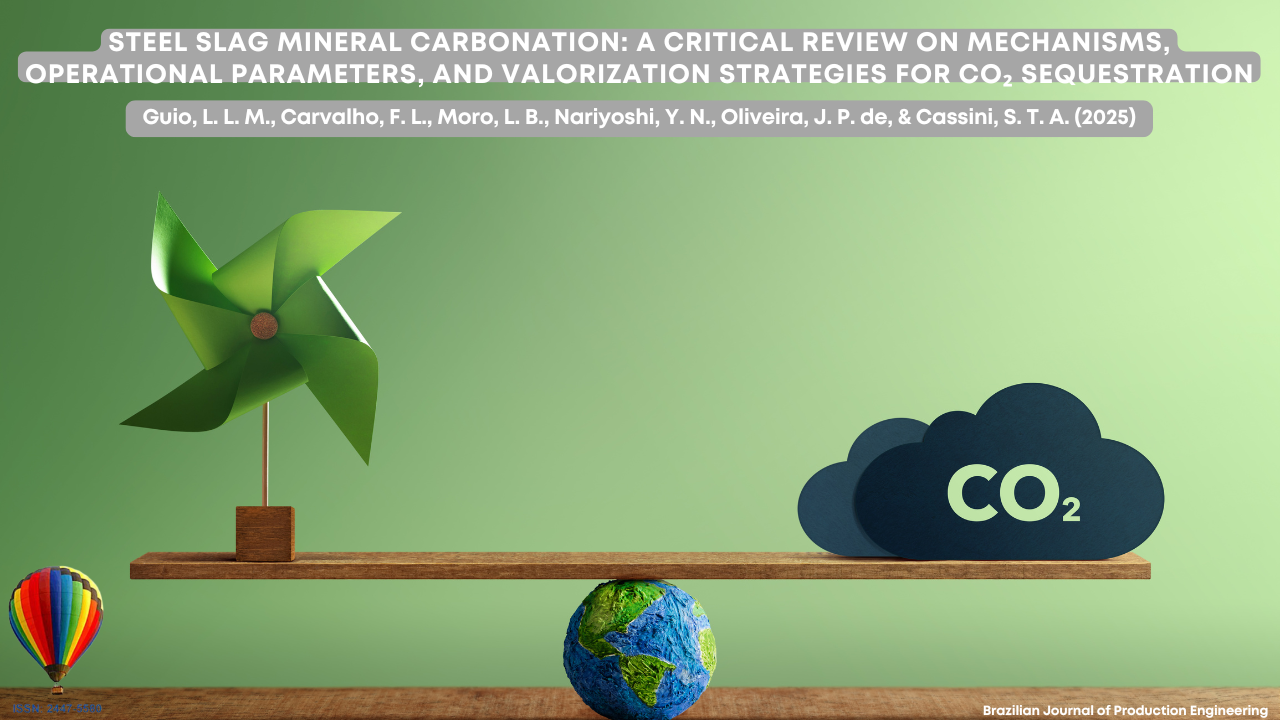
Steel slag mineral carbonation: a critical review on mechanisms, operational parameters, and valorization strategies for CO₂ sequestration
- Authors
-
-
Laura Loyola Marion Guio
Universidade Federal do Espírito Santo (UFES)
Author
-
Franciely Lorenzon Carvalho
Universidade Federal do Espírito Santo (UFES)
Author
-
Larissa Bernardino Moro
Centro de Pesquisa, Inovação e Desenvolvimento - CPID
Author
-
Yuri Nascimento Nariyoshi
Universidade Federal do Espírito Santo (UFES)
Author
-
Jairo Pinto de Oliveira
Universidade Federal do Espírito Santo (UFES)
Author
-
Sérvio Tulio Alves Cassini
Universidade Federal do Espírito Santo (UFES)
Author
-
- Keywords:
- mineral carbonation, steel slag, CO₂ sequestration, waste valorization, operational parameters
- Abstract
-
The steel industry is one of the largest global contributors to carbon dioxide (CO₂) emissions, accounting for 7% to 9% of the world's total. In this context, mineral carbonation of steel slags emerges as a promising strategy for permanent CO₂ sequestration and the valorization of industrial waste. This paper presents a critical and systematic review of the literature from 2014 to 2024, exploring fundamental mechanisms, the influence of operational parameters, and the valorization potential of carbonated steel slag. The analysis revealed that, although ladle furnace (LF) and basic oxygen furnace (BOF) slags stand out for their reactivity, sequestration efficiency varies significantly with operational conditions. Indirect methods and supercritical carbonation demonstrated high effectiveness, with capture rates that can exceed 90% and 41.9%, respectively. Pilot-scale studies corroborate feasibility, with reported efficiencies of up to 89.7%. Optimizing parameters such as temperature (around 60-90°C), liquid-to-solid ratio (L/S of 4:1), and fine particle size is crucial, although the effect of CO₂ pressure can vary and, in some cases, excessive pressure may reduce efficiency. Carbonated products have wide applications in civil construction as aggregates and binders, improving volume stability and immobilizing heavy metals, which can reduce CO₂ emissions in concrete production by up to 30%. Challenges such as slag composition variability and high energy consumption for grinding persist. It is concluded that method standardization, parameter optimization, and the promotion of industrial-scale projects are essential to maximize the potential of steel slag as a sustainable solution for decarbonization and the circular economy.
- Author Biographies
- References
-
Bonenfant, D., Kharoune, M., & Hausler, R. (2017). Optimization of a mineral carbonation process for CO₂ sequestration using steel slag. Journal of Environmental Science and Health, Part A, 52(2), 173-181. https://doi.org/10.1080/10934529.2016.1242337
Chang, E. E., Chang, Y. H., & Chen, Y. H. (2011). Accelerating carbonation of steel slag for CO₂ fixation and construction material. Journal of Hazardous Materials, 186(2-3), 1345-1351. https://doi.org/10.1016/j.jhazmat.2010.12.016
Chen, Z., Li, R., Zheng, X., & Liu, J. (2021). Carbon sequestration of steel slag and carbonation for activating RO phase. Cement and Concrete Research, 139, 106271. https://doi.org/10.1016/j.cemconres.2020.106271
Cheng, C., Huang, W., Xu, H., Liu, Z., Li, X., Shi, H., Yu, Y., Qu, Z., & Yan, N. (2023). CO₂ sequestration and CaCO₃ recovery with steel slag by a novel two-step leaching and carbonation method. Science of the Total Environment, 891, 164203. https://doi.org/10.1016/j.scitotenv.2023.164203
Costa, G., Santos, R. M., & Al-Manaseer, A. A. (2018). Life Cycle Assessment (LCA) of CO₂ sequestration technologies: A review. Journal of Cleaner Production, 182, 895-905. https://doi.org/10.1016/j.jclepro.2018.02.100
Davis, S. J., Caldeira, K., & Matthews, H. D. (2015). Future atmospheric CO₂ with or without carbon capture and storage. Nature Climate Change, 5(9), 833-837. https://doi.org/10.1038/nclimate2660
DiGiovanni, T., Li, W., Yang, S., Lin, M., & Choo, Y. (2024). Carbonation of steel slag for sustainable building materials: A comprehensive review. Construction and Building Materials, 412, 134601. https://doi.org/10.1016/j.conbuildmat.2024.134601
Gomari, K. E., Gomari, S. R., Hughes, D., & Ahmed, T. (2024). Exploring the potential of steel slag waste for carbon sequestration through mineral carbonation. Journal of Environmental Management, 351, 119835. https://doi.org/10.1016/j.jenvman.2023.119835
Gong, P., Peng, Y., Yu, D., & Yang, B. (2021). Life cycle assessment of mineral carbonation of steel slag for CO₂ sequestration and utilization. Journal of Cleaner Production, 290, 125191. https://doi.org/10.1016/j.jclepro.2021.125191
Ho, H.-J., Iizuka, A., & Kubo, H. (2022). Direct aqueous carbonation of dephosphorization slag under mild conditions. Environmental Technology & Innovation, 28, 102905. https://doi.org/10.1016/j.eti.2022.102905
IPCC, 2023: Climate Change 2023: Synthesis Report. Contribution of Working Groups I, II and III to the Sixth Assessment Report of the Intergovernmental Panel on Climate Change [Core Writing Team, H. Lee and J. Romero (eds.)]. IPCC, Geneva, Switzerland. https://doi.org/10.59325/2f170e55
Kim, J., & Azimi, G. (2021). The CO₂ sequestration by supercritical carbonation of electric arc furnace slag. Journal of CO₂ Utilization, 52, 101667. https://doi.org/10.1016/j.jcou.2021.101667
Lee, J., Jo, H., Lim, Y., Kim, J., Lim, J., & Kim, M. (2023). Long-term performance and CO₂ sequestration of carbonated EAF slag aggregates in concrete. Construction and Building Materials, 381, 131238. https://doi.org/10.1016/j.conbuildmat.2023.131238
Li, Z., Xing, Y., Ma, M., Su, W., Cui, Y., Tian, J., & Fei, F. (2024). Towards the co-benefits of carbon capture, utilization and sequestration: A life cycle assessment study for steel slag disposal. Journal of Cleaner Production, 443, 141166. https://doi.org/10.1016/j.jclepro.2023.141166
Mechelen, D., Van (2015). In Quaghebeur, M., Mechelen, D., Van, & Mertens, G. (2015). Carbonation of steel slag as a method for CO₂ sequestration and production of value-added materials: A state-of-the-art review. Waste Management, 42, 198-209. https://doi.org/10.1016/j.wasman.2015.04.015
Narani, S. S., & Siddiqua, S. (2024). Accelerated carbonation of alkali-activated blended blast furnace slag and wood fly ash. Construction and Building Materials, 411, 134570. https://doi.org/10.1016/j.conbuildmat.2023.134570
Polettini, A., Pomi, R., & Stramazzo, A. (2016). Mineral carbonation of BOF slag for CO₂ sequestration: A laboratory study. Waste Management, 50, 148-158. https://doi.org/10.1016/j.wasman.2016.02.012
Sanna, A., Dri, M., Maroto-Valer, M. M., & Styles, M. (2013). Accelerated mineral carbonation for CO₂ sequestration in steel slag: Effect of process parameters. Chemical Engineering Journal, 222, 584-593. https://doi.org/10.1016/j.cej.2013.02.046
Tian, S., Jiang, J., Li, K., Yan, F., & Chen, X. (2014). Performance of steel slag in carbonation–calcination looping for CO₂ capture from industrial flue gas. RSC Advances, 4(12), 6858–6862. https://doi.org/10.1039/C3RA45672J
Wang, X., Lu, X., & Li, J. (2020). Mineral carbonation of steel slag: A review of recent developments and future trends. Journal of Cleaner Production, 260, 121041. https://doi.org/10.1016/j.jclepro.2020.121041
Wang, Y., Li, R., Jiang, W., & Zhang, H. (2022). Sustainable utilization of carbonated steel slag in cementitious materials: A review. Construction and Building Materials, 350, 128822. https://doi.org/10.1016/j.conbuildmat.2022.128822
Wu, L., Li, H., Mei, H., Rao, L., Xia, Y., & Dong, Y. (2023). A novel approach to accelerate carbon dioxide sequestration of ladle furnace slag using sodium bicarbonate solution. Minerals Engineering, 204, 108374. https://doi.org/10.1016/j.mineng.2023.108374
Yao, J., Chen, Q., Zeng, L., & Ding, W. (2024). Preparation of calcium carbonate with microstructure and nanostructure from carbide slag. Particuology, 90, 1–9. https://doi.org/10.1016/j.particu.2023.102604
Zhao, L., Xu, Y., Sun, Q., & Zhang, Y. (2020). Comparison of different methods for CO₂ mineralization using steel slag: A review. Journal of CO₂ Utilization, 37, 176-191. https://doi.org/10.1016/j.jcou.2019.11.025
- Cover Image
-
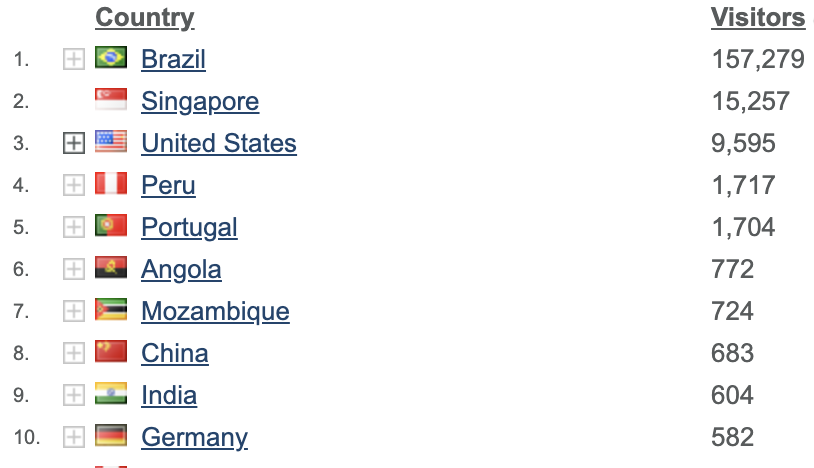
- Downloads
- Published
- 2025-12-04
- Section
- ENVIRONMENTAL ENGINEERING AND SUSTAINABILITY
- License
-
Copyright (c) 2025 Guio, L. L. M., Carvalho, F. L., Moro, L. B., Nariyoshi, Y. N., Oliveira, J. P. de, & Cassini, S. T. A.

This work is licensed under a Creative Commons Attribution 4.0 International License.
All works published in the Brazilian Journal of Production Engineering (BJPE) are licensed under Creative Commons Attribution 4.0 International (CC BY 4.0). This means that: Anyone can copy, distribute, display, adapt, remix, and even commercially use the content published in the journal; Provided that due credit is given to the authors and to BJPE as the original source; No additional permission is required for reuse, as long as the license terms are respected. This policy complies with the principles of open access, promoting the broad dissemination of scientific knowledge. 🔗 Click here to access the full license
