

2.png)


































Best practices for monitoring and risk control in social projects: a review
- Authors
-
-
Keydson Quaresma Gomes
Universidade Federal do Espírito Santo - UFES - CEUNES
Author
-
Katia Maria Morais Eiras
Universidade Federal do Espírito Santo - UFES - CEUNES
Author
-
Osmar Vicente Chevez Pozo
Universidade Federal do Espírito Santo - UFES - CEUNES
Author
-
- Keywords:
- Risk management, Risk monitoring and control, Risk treatment, Social projects, Social risks
- Abstract
-
projects, and therefore, this study aimed to identify the best practices for risk monitoring and control (RMC) in social projects. A literature review was conducted to identify the practices that represent the pillars of social risk management. The search was carried out in the databases Web of Science, Scopus, and Google Scholar. After applying filtering methods, 41 articles were selected to identify the terms corresponding to RMC practices. The review highlighted that social risk is associated with the occurrence of uncertain consequences (positive or negative) arising from planned actions or events that impact social relationships and collective values, creating instability, conflicts, or vulnerabilities. The study provided a comparison between the management of a traditional project and a social project. The eight best practices for risk monitoring and control in social projects were identified, with those found most frequently in the reviewed literature being highlighted. The conclusion of this work aimed to show that this approach represents a significant academic contribution, providing a more coherent and accessible perspective on the best practices for risk monitoring and control in social projects.
- Author Biographies
- References
-
Alkheder, S., Alzarari, A., & Alsaleh, H. (2023). Urban construction-based social risks assessment in hot arid countries with social network analysis. Habitat International, 131, 102730. https://doi.org/10.1016/j.habitatint.2022.102730
Almashhour, R., Al-Mhdawi, M. K. S., Daghfous, A., Qazi, A., & Ojiako, U. (2025). Traditional to sustainable risk management in the construction industry: a systematic literature review. International Journal of Managing Projects in Business, 18(3), 528-565. https://doi.org/10.1108/IJMPB-01-2025-0021
Angulo, D., Padron, R., Gualdrón, C., & Villa, J. L. (2024). Importance of good project management practices in NGOs. 22nd LACCEI International Multi-Conference for Engineering, Education, and Technology. San José, Costa Rica.
Bakhtawar, B., Thaheem, M. J., Arshad, H., Tariq, S., Mazher, K. M., Zayed, T., & Akhtar, N. (2021). A sustainability-based risk assessment for P3 projects using a simulation approach. Sustainability, 14, 344. https://doi.org/10.3390/su14010344
Barragan, L. G., Weffort, E. F. J., & Aranha, M. P. S. (2006). O processo de gestão de riscos e controles internos nas entidades sem fins lucrativos como uma ferramenta para redução de custos. Anais do Congresso Brasileiro de Custos - ABC. Recuperado de https://anaiscbc.emnuvens.com.br/anais/article/view/1742
Bashynska, I., Kovalova, O., Malovichko, O., & Shirobokova, O. (2020). Risk management of innovative socially significant projects (on the example of urban passenger transport). International Journal of Advanced Research in Engineering and Technology, 11(4), 256-267. https://ssrn.com/abstract=3598184
Breen, M. J., Kebede, A. S., & König, C. S. (2022). The safe development paradox in flood risk management: a critical review. Sustainability, 14(24), 16955. https://doi.org/10.3390/su142416955
Buganová, K. & Šimíčková, J. (2019). Risk management in traditional and agile project management. Transportation Research Procedia, 40, 986-993. https://doi.org/10.1016/j.trpro.2019.07.138
Chen, X. & Hu, X. M. (2013). Study of social risk assessment on major projects based on risk perception. Proceedings of the 2013 International Conference on Management Science & Engineering (20th). (pp. 1900-1905). Harbin, P.R. China. https://doi.org/10.1109/ICMSE.2013.6586439
Cunha, L., Ceryno, P., & Leiras, A. (2019). Social supply chain risk management: a taxonomy, a framework and a research agenda. Journal of Cleaner Production, 220, 1101-1110. https://doi.org/10.1016/j.jclepro.2019.02.183
Dinu, A. M. (2015). The importance of risk management in projects. Journal of International Business and Economics, 1, 1-10. Recuperado de https://www.researchgate.net/publication/286480708
Dinu, A. M. (2016). Risk treatment in projects. *Knowledge Horizons - Economics, 8*(1), 160–163. http://www.orizonturi.ucdc.ro
Eiras, K. M. M., Gomes, K. Q., & Campos, C. C. (2024). Definição de critérios de seleção para escolha de projetos sociais de aplicação direta na condição social do indivíduo. South American Development Society Journal, 10(28), 319-334. https://doi.org/10.24325/issn.2446-5763.v10i28p319-334
Gauß, P. & Parlings, M. (2021). Framework for indicator-based, sociotechnical project risk monitoring. In W. Kersten, C. M. Ringle, & T. Blecker (Eds.), adapting to the future: how digitalization shapes sustainable logistics and resilient supply chain management (pp. 185-218). Proceedings of the Hamburg International Conference of Logistics (HICL). https://doi.org/10.15480/882.3968
Golini, R., Kalchschmidt, M., & Landoni, P. (2015). Adoption of project management practices: The impact on international development projects of non-governmental organizations. International Journal of Project Management, 33(3), 650–-663. https://doi.org/10.1016/j.ijproman.2014.09.006
Green, S. D., & Dikmen, I. (2022). Narratives of Project Risk Management: From Scientific Rationality to the Discursive Nature of Identity Work. Project Management Journal, 53(6), 608–624. https://doi.org/10.1177/87569728221124496
Guan, L., Abbasi, A., & Ryan, M. J. (2021). Prioritizing project interdependent risks: A network-based approach. Proceedings of the 2021 IEEE International Conference on Industrial Engineering and Engineering Management (IEEM). (pp. 1513-1517). https://doi.org/10.1109/IEEM50564.2021.9673060
Han, T.-C. & Wang, C.-M. (2021). Shipping bunker cost risk assessment and management during the coronavirus oil shock. Sustainability, 13(9), 4998-5012. https://doi.org/10.3390/su13094998
Holzmann, R. & Jørgensen, S. (2001). Social risk management: a new conceptual framework for social protection, and beyond. International Tax and Public Finance, 8, 529-556. https://doi.org/10.1023/A:1011202517587
Iastremska, O. & Korelenko, O. (2020). Assessment and risk management of socio-economic projects. Three Seas Economic Journal, 1(4), 166-172. https://doi.org/10.30525/2661-5150/2020-4-24
Jiang, W., Lei, J., Sang, M., Wang, Y., & Ye, K. (2021). A conceptual framework for modeling social risk tolerance for ppp projects: an empirical case of China. Buildings, 11(11), 531. https://doi.org/10.3390/buildings11110531
Kahkönen, A.-K., Marttinen, K., Kontio, A., & Lintukangas, K. (2023). Practices and strategies for sustainability-related risk management in multi-tier supply chains. Journal of Purchasing & Supply Management, 29, 100848. https://doi.org/10.1016/j.pursup.2023.100848
Klaus-Rosińska, A. & Karpowicz, M. (2023). Risk management in social projects. Scientific Papers of Silesian University of Technology, Organization and Management Series, 169, 1-17. https://doi.org/10.29119/1641-3466.2023.169.24
Krechowicz, M. (2022). Towards sustainable project management: evaluation of relationship-specific risks and risk determinants threatening to achieve the intended benefit of interorganizational cooperation in engineering projects. Sustainability, 14, 2961. https://doi.org/10.3390/su14052961
Kubíčková, K. & Hodžić, M. (2019). The evaluation of project management practices in the Czech social enterprises. Economic Research-Ekonomska Istraživanja, 32(1), 165-174. https://doi.org/10.1080/1331677X.2018.1553679
Liu, Z., Zhu, Z., Wang, H., & Huang, J. (2016). Handling social risks in government-driven mega project: an empirical case study from West China. International Journal of Project Management, 34(3), 202-218. https://doi.org/10.1016/j.ijproman.2015.11.003
Luppino, R., Hosseini, M. R., & Rameezdeen, R. (2014). Risk management in research and development (R&D) projects: The case of South Australia. Asian Academy of Management Journal, 19(2), 67-85. Recuperado de https://ejournal.usm.my/aamj/article/view/aamj_vol19-no-2-2014_4
Luther, B., Gunawan, I., & Nguyen, N. (2023). Identifying effective risk management frameworks for complex socio-technical systems. Safety Science, 158, 105989. https://doi.org/10.1016/j.ssci.2022.105989
Ma, L., Wang, L., Wu, K.-J., Tseng, M.-L., & Chiu, A. S. F. (2018). Exploring the decisive risks of green development projects by adopting social network analysis under stakeholder theory. Sustainability, 10(6), 2104. https://doi.org/10.3390/su10062104
Mahmoudi, H., Ren, O., Vanclay, F., Hoffmann, V., & Karami, E. (2013). A framework for combining social impact assessment and risk assessment. Environmental Impact Assessment Review, 43, 1-8. https://doi.org/10.1016/j.eiar.2013.05.003
Mavi, R. K., Gengatharen, D., Mavi, N. K., Hughes, R., Campbell, A., & Yates, R. (2021). Sustainability in construction projects: a systematic literature review. Sustainability, 13(4), 1932. https://doi.org/10.3390/su13041932
Miao, J., Huang, D., & He, Z. (2021). Social risk assessment and management for major construction projects in China based on fuzzy integrated analysis. Journal of Risk and Financial Management, 13(6), 156-170. https://doi.org/10.3390/jrfm13060156
Moczydłowska, J., Sadkowska, J., Zelazko, B., Ciocoiu, C. N., & Stawicka, E. (2023). Understanding risk culture in the context of a sustainable project: a preliminary study. Sustainability, 15, 5302. https://doi.org/10.3390/su15065302
Muazu, R. I., Rothman, R., & Maltby, L. (2021). Integrating life cycle assessment and environmental risk assessment: a critical review. Journal of Cleaner Production, 293, 126120. https://doi.org/10.1016/j.jclepro.2021.126120
Muriana, C. & Vizzini, G. (2017). Project risk management: a deterministic quantitative technique for assessment and mitigation. International Journal of Project Management, 35(4), 320-340. https://doi.org/10.1016/j.ijproman.2017.01.010
Nemoto, M. C. O., Silva, D. A., & Pinochet, L. H. C. (2018). Avaliação de aplicações das boas práticas na gestão de projetos sociais para instituições do terceiro setor. Revista de Gestão e Projetos, 9(3). https://doi.org/10.5585/gep.v9i3.11261
Obondi, K. C. (2022). The utilization of project risk monitoring and control practices and their relationship with project success in construction projects. Journal of Project Management, 7, 35-52. https://doi.org/10.5267/j.jpm.2021.7.002
Ogirri, K. O., & Idugie, I. J. (2024). A comparative analysis of traditional versus agile project management methodologies on IT project outcomes. Asian Journal of Research in Computer Science, 17(9), 1-12. https://doi.org/10.9734/ajrcos/2024/v17i9495
Pawlak, P. (2024). Practical aspects of project management. in international managerial skills in higher education institutions. IGI Global. https://doi.org/10.4018/979-8-3373-0791-6.ch014
PMI. (2017). A guide to the project management body of knowledge (PMBOK guide) (6th ed.). Project Management Institute.
Rodríguez-Rivero, R., Ortiz-Marcos, I., Romero, J., & Ballesteros-Sánchez, L. (2020). Finding the links between Risk Management and Project Success: evidence from international development projects in Colombia. Sustainability, 12(22), 9294. https://doi.org/10.3390/su12219294
San Cristóbal, J. R. Diaz, E., González, M. A., Madariaga, E., López, S., & Trueba, M. (2016). From the hard paradigms towards multimethodology in project management. Procedia Computer Science, 100, 1228-1234. https://doi.org/10.1016/j.procs.2016.09.152
Shaktawat, A. & Vadhera, S. (2021). Risk management of hydropower projects for sustainable development: a review. Environment, Development and Sustainability, 23, 45-76. https://doi.org/10.1007/s10668-020-00607-2
Shi, Q., Liu, Y., Zuo, J., Pan, N., & Ma, G. (2015). On the management of social risks of hydraulic infrastructure projects in China: a case study. International Journal of Project Management, 33, 483-496. https://doi.org/10.1016/j.ijproman.2014.06.003
Simpson, N. P., Mach, K. J., Constable, A., Hess, J., Hogarth, R., Howden, M., Lawrence, J., Lempert, R. J., Muccione, V., Mackey, B., New, M. G., O’Neill, B., Otto, F., Pörtner, H.-O., Reisinger, A., Roberts, D., Schmidt, D. N., Senevratne, S., Strongin, S., Van Aalst, M., Totin, E., & Trisos, C. H. (2021). A framework for complex climate change risk assessment. One Earth, 4, 489-498. https://doi.org/10.1016/j.oneear.2021.03.005
Song, J., Munyinda, M., & Adu Sarfo, P. (2025). Examining the impact of risk management practices on sustainable project performance in the construction industry: the role of stakeholder engagement. Frontiers in Built Environment, 11, 1575827. https://doi.org/10.3389/fbuil.2025.1575827
Song, Y. & Hao, S. (2023). Influence of project governance mechanisms on the sustainable development of public-private partnership projects: an empirical study from China. Buildings, 13, 2424. https://doi.org/10.3390/buildings13102424
Soufi, H. R., Esfahanipour, A., & Shirazi, M. A. (2021). Risk reduction through enhancing risk management by resilience. International Journal of Disaster Risk Reduction, 64, 102497. https://doi.org/10.1016/j.ijdrr.2021.102497
Taylor, P. (2016). The Social Project Manager. PM World Journal, V(V), 1–6. http://www.pmworldjournal.net.
Testorelli, R., Tiso, A., & Verbano, C. (2024). Value creation with project risk management: a holistic framework. Sustainability, 16, 753. https://doi.org/10.3390/su16020753
Valadares, F. S., Moura, N. C. S., Pereira, T. N. F., & Arantes, M. O. (2024). Identification of the main traditional project management methods through a systematic literature review. International Journal of Advanced Computer Science and Applications (IJACSA), 15(6), 952-960. https://doi.org/10.14569/IJACSA.2024.0150602
Wang, A., Wang, Y., Zheng, L., & Hu, Y. (2018). Social risk conduction analysis of large-scale water conservancy projects: a set of survey data from China. Construction Research Congress 2018 (pp. 688-697). https://doi.org/10.1061/9780784481371.084
Wang, F., Antwi-Afari, M. F., Anwer, S., Umer, W., & Mehmood, I. (2025). Risk management in sustainable building projects: a systematic literature review and scientometric analysis. Cleaner Production Letters, 9, 100111. https://doi.org/10.1016/j.clpl.2025.100111
Wassénius, E. & Crona, B. I. (2022). Adapting risk assessments for a complex future. One Earth, 5(1), 39-49. https://doi.org/10.1016/j.oneear.2021.12.004
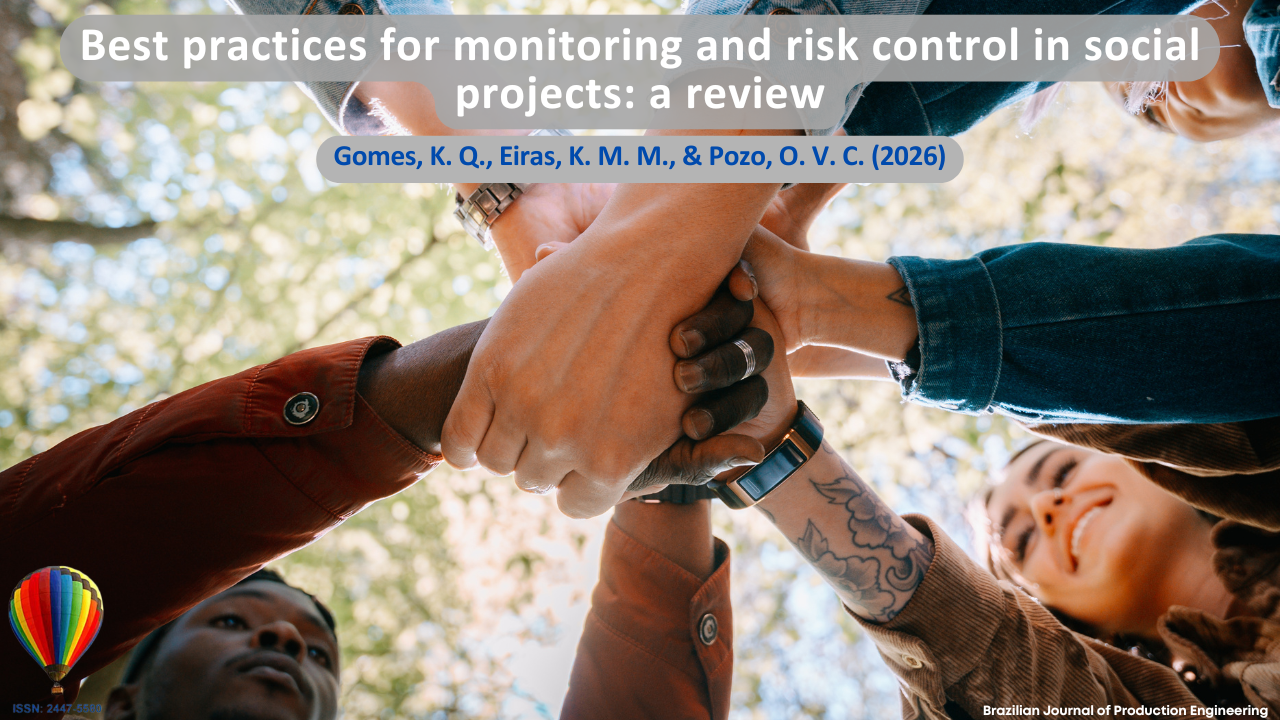
- Cover Image
-
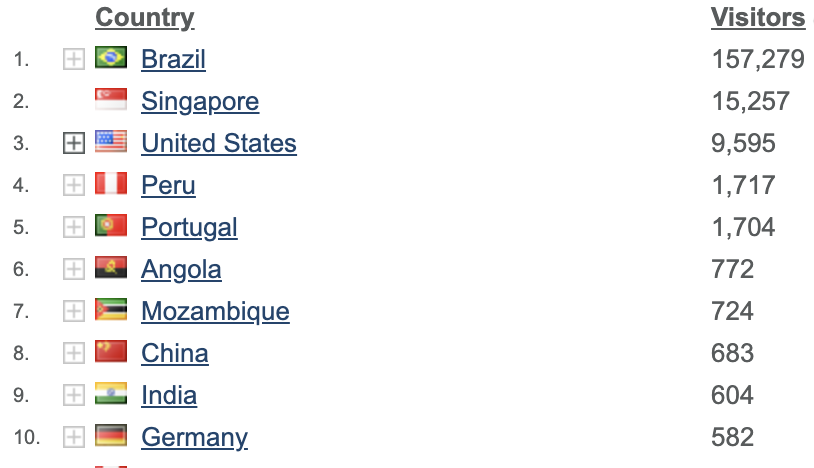
- Downloads
- Published
- 2026-05-07
- Section
- ORGANIZATIONAL ENGINEERING
- License
-
Copyright (c) 2026 Gomes, K. Q., Pozo, O. V. C., & Eiras, K. M. M.

This work is licensed under a Creative Commons Attribution 4.0 International License.
All works published in the Brazilian Journal of Production Engineering (BJPE) are licensed under Creative Commons Attribution 4.0 International (CC BY 4.0). This means that: Anyone can copy, distribute, display, adapt, remix, and even commercially use the content published in the journal; Provided that due credit is given to the authors and to BJPE as the original source; No additional permission is required for reuse, as long as the license terms are respected. This policy complies with the principles of open access, promoting the broad dissemination of scientific knowledge. 🔗 Click here to access the full license
