Sophists and Philosophers in the Roman Empire
an interview with Tim Whitmarsh
DOI:
https://doi.org/10.29327/rom.v26i.51486Palabras clave:
Sophists, Philosophers, Roman Empire:, Tim WhitmarshResumen
Interview with Tim Whitmarsh.
Descargas
Referencias
ACHILLES TATIUS: Leucippe and Clitophon. Edited with commentary by T. Whitmarsh. Cambridge: Cambridge University Press, 2020.
WHITMARSH, T. (ed.). Local knowledge and microidentities in the imperial Greek world. Cambridge: Cambridge University Press, 2010.
WHITMARSH, T. Battling the Gods: Atheism in the Ancient World. New York: Alfred A. Knoff, 2015.
WHITMARSH, T. Beyond the Second Sophistic: adventures in Greek postclassicism. Los Angeles: University of California Press, 2013.
WHITMARSH, T. Greek Literature and the Roman Empire: the politics of imitation. Oxford: Oxford University Press, 2001.
WHITMARSH, T. Narrative and identity in the Ancient Greek Novel: returning Romance. Cambridge: Cambridge University Press, 2011.
WHITMARSH, T. Reading power in Roman Greece: the ‘paideia’ of Dio Chrysostom. In: LEE TOO, Y.; LIVINGSTONE, N. (ed.). Pedagogy and power: rhetorics of classical learning. Cambridge: Cambridge University Press, 2009.
WHITMARSH, T. Rome’s Age of Revolution: Christians in a Classical World. London: Bodley Head, 2024.
WHITMARSH, T. The Second Sophistic. Cambridge: Cambridge University Press, 2005.
WHITMARSH, T.Dirty Love: the genealogy of the Ancient Greek Novel. Oxford/New York: Oxford University Press, 2018.
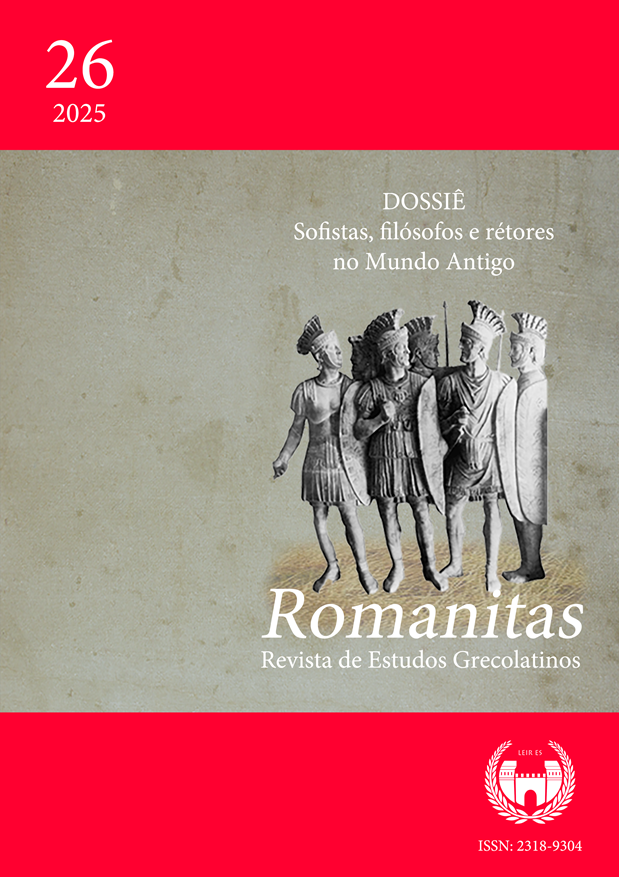
Descargas
Publicado
Número
Sección
Licencia
Derechos de autor 2025 Tim Whitmarsh, Esdra Erlacher

Esta obra está bajo una licencia internacional Creative Commons Atribución 4.0.
a. Los autores conservan los derechos de autor y otorgan a la revista el derecho de publicar primero.
c. Los autores están autorizados a asumir contratos adicionales por separado, para la distribución no exclusiva de la versión del trabajo publicado en esta revista (por ejemplo, publicación en repositorio institucional o como capítulo de libro), con reconocimiento de autoría y publicación inicial en esta revista.
c. Se permite y se estimula a los autores a publicar y distribuir su trabajo online (por ejemplo, en repositorios institucionales o en su página personal) después de la primera publicación de la revista, con los debidos créditos. Atribución-No Comercial-No Derivadas
d. Los textos de la revista tienen licencia bajo CC BY 4.0 Deed Atribución 4.0 Internacional (CC BY).