About the Journal

Romanitas – Revista de Estudos Grecolatinos was born, at first, from a finding: the visible lack, in Brazil, of journals of an interdisciplinary nature committed to the dissemination of intellectual production around Greek and Roman society, a reality in sharp contrast with the increase in the interest aroused, in the last decades, by Classical Studies, as it is possible to conclude based on the growing number of researchers involved, at all levels of academic formation, with research projects on the past of Greece and Rome, which motivated the team of Laboratory of Studies on the Roman Empire/Section ES, linked to the History Postgraduate Program of the Universidade Federal do Espírito Santo (Ufes), to found the journal.

Announcements

Novo número

23-01-2026

Prezados leitores,

Temos a satisfação de informar que a Romanitas – Revista de Estudos Grecolatinos acaba de publicar seu número mais recente, disponível em:
https://periodicos.ufes.br/romanitas. Convidamos à consulta do sumário e à visita ao site da revista, onde se encontram os artigos e demais contribuições desta edição, que esperamos sejam de interesse de nossa comunidade acadêmica.


Read more about Novo número

Current Issue

Vol. 26 (2025): July-December
					View Vol. 26 (2025): July-December

Editor: Esdra Erlacher

Published: 24-01-2026

Dossier: Sophists, Philosophers, and Rhetoricians in the Ancient World

  • Introduction

    Esdra Erlacher
    7-9
    DOI: https://doi.org/10.29327/rom.v26i.51482
  • Sophists and Philosophers in the Roman Empire an interview with Tim Whitmarsh

    Esdra Erlacher
    10-15
    DOI: https://doi.org/10.29327/rom.v26i.51486
  • Philosophers and Allegorist Philosophers in Ancient Greece

    Thiago David Stadler
    16-29
    DOI: https://doi.org/10.29327/rom.v26i.47669
  • A philosophy for the Romans Cicero and the New Academy

    Claudia Beltrão
    30-50
    DOI: https://doi.org/10.29327/rom.v26i.47613
  • Between Philosophy and Sophistry the case of Dio of Prusa (1st and 2nd Centuries)

    Esdra Erlacher
    51-69
    DOI: https://doi.org/10.29327/rom.v26i.48126
  • Pausanias a perieget in Second Sophistic?

    Arhão Henrique Ramos da Silva
    70-89
    DOI: https://doi.org/10.29327/rom.v26i.47771
  • The influence of the ‘grammatici’ and ‘rhētores’ in the‘Corpus Hermeticum’ 18 (11-16)

    David Pessoa de Lira
    90-104
    DOI: https://doi.org/10.29327/rom.v26i.47790

Open subject

  • A critical analysis regarding Diomedes and the communication of ‘menos’ (Iliad, Book V)

    Eduardo Rodrigues
    106-122
    DOI: https://doi.org/10.29327/rom.v26i.47903
  • Mercenary networks in Greek historiography

    Breno Battistin Sebastiani
    123-135
    DOI: https://doi.org/10.29327/rom.v26i.47844
  • The relations between power and memory in the‘Urbs’ astudy of Republican honorific columns and Octavian’s ‘columnae rostratae’ based on coins

    Thiago Eustáquio Araujo Mota
    136-154
    DOI: https://doi.org/10.29327/rom.v26i.46851
  • From the cross to divinity the transformation of Jesus in Greco-Roman Antiquity

    André Magalhães Coelho
    155-176
    DOI: https://doi.org/10.29327/rom.v26i.46860
  • The Sacred Basileía of Justinian (527–565) Concept, Definitions, and Problems

    Ana Maria de Oliveira
    177-193
    DOI: https://doi.org/10.29327/rom.v26i.47842

Reviews

  • A review of Guerra e schiaviin Grecia e a Roma: il modo diproduzione bellico

    María Candela Paz
    195-199
    DOI: https://doi.org/10.29327/rom.v26i.46330
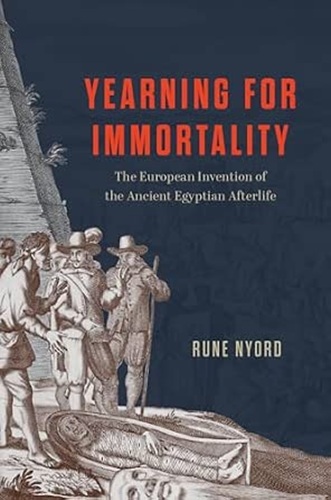
  • Cultural hybridity and mortuary rites in the Greco-Roman Egypt

    Jéssica Ladeira Santana
    200-206
    DOI: https://doi.org/10.29327/rom.v26i.47873
  • Philostratus new approaches

    Letícia Aga Pereira Passos
    207-214
    DOI: https://doi.org/10.29327/rom.v26i.47866
View All Issues