

2.png)



































Aplicação do business intelligence para gerenciamento e controle de estoque
- Autores
-
-
Karolaine Cristina Pereira
Universidade Federal de Catalão, Faculdade de Engenharia, Engenharia de Produção
Autor
-
Maria Luciene Borges Barbosa
Universidade Federal de Catalão, Faculdade de Engenharia, Engenharia de Produção
Autor
-
Aline Gonçalves dos Santos
Universidade Federal de Catalão, Faculdade de Engenharia, Engenharia de Produção
Autor
-
Lázaro Antônio da Fonseca Jr
Universidade Federal de Catalão, Faculdade de Engenharia, Engenharia de Produção
Autor
-
- Palavras-chave:
- Gestão de estoque, Microsoft Power BI, Power Apps
- Resumo
-
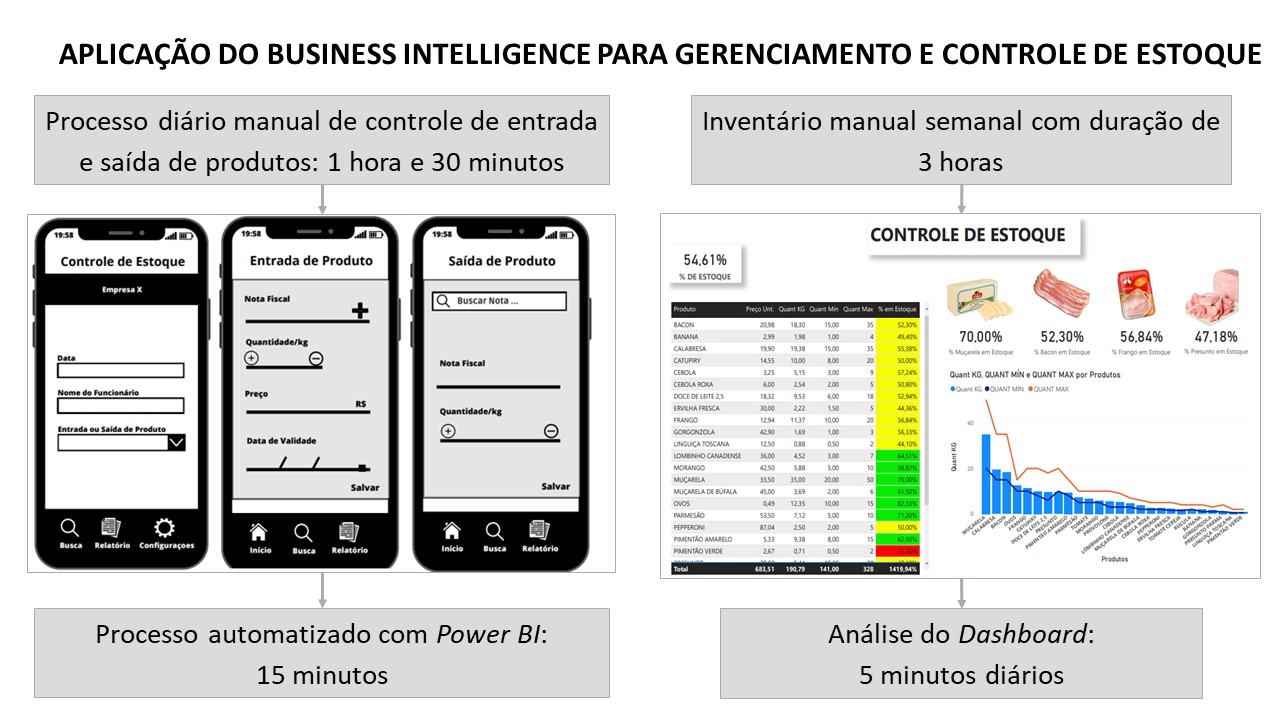
A constante necessidade das organizações em atender seus clientes com eficiência, eficácia e agilidade, torna necessário desenvolver uma boa gestão de estoque. Para tanto, ferramentas tecnológicas têm sido desenvolvidas e empregadas pelas organizações na gestão dos dados relacionados ao estoque. Diante deste cenário, o presente estudo foi desenvolvido com o objetivo de criar um aplicativo para gestão e controle de estoque por meio da ferramenta Business Intelligence (Power BI), com indicadores que irão mostrar todas as entradas e saídas de insumos em tempo real em uma empresa do setor alimentício. Para identificação das necessidades da empresa, foi realizado um acompanhamento das rotinas do setor e o monitoramento da forma em que os relatórios gerencias de entra e saída de mercadorias eram criados. Assim, desenvolveu-se um aplicativo no Software Power Apps para melhorar o processo de captação de informações relativas ao estoque, entradas e saídas. O Software Power BI foi utilizado para monitorar e analisar os indicadores e níveis de estoque. Assim, observou-se que o aplicativo pode proporcionar uma redução de 80% no tempo dispendido a lançamentos de entradas e saídas de itens, além de reduzir, em 33%, o tempo com a conferência de itens de maior prioridade de compra.
- Referências
-
Banzato, E. (2005) Tecnologia da informação aplicada à logística. 1ª ed. São Paulo/SP: IMAM.
Batista, E. O. (2012). Sistemas de Informação: O Uso Consciente da Tecnologia para o Gerenciamento. São Paulo: Saraiva.
Bowersox, D. J. & Closs, D. J. (2001). Logística empresarial: o processo de integração da cadeia de suprimento. São Paulo, Atlas.
Castro, L. A. (2020). Dashboard em Power BI: Consolidação e análise de indicadores de performance de usinas de beneficiamento. Revista Científica Multidisciplinar Núcleo do Conhecimento, 18, 21-30.
Council of Logistics Management. (1996). Recuperado de www.clm1.org.br. Article 1.
Dias, M. A. P. (1993) Administração de materiais: uma abordagem logística. São Paulo: Atlas.
Dalfovo, O. & Tamborlin, N. (2010). Business Intelligence. Joinville/SC: Clube dos Autores.
Dias, M. A. (2012). Administração de materiais: uma abordagem logística. 6ª ed., São Paulo: Atlas.
Fleury, P. F., Wanke, P., & Figueiredo, K. F. (2003). Logística e gerenciamento da cadeia de suprimentos: planejamento do fluxo de produtos e dos recursos. São Paulo, Atlas.
Martins, P. G. & ALT, P. R. C. (2004). Administração de materiais e recursos patrimoniais. São Paulo: Saraiva.
Microsoft. Power-Apps. (2022). Preços do Power Apps. Recuperado de https://powerapps.microsoft.com/pt-br/pricing/
Microsoft. Power-Apps (2022). Adicionar conexões de dados a aplicativos de tela. Recuperado de https://learn.microsoft.com/pt-br/power-apps/maker/canvas-apps/add-dataconnection
Morais, R. R. (2015). Logística empresarial. Curitiba: InterSaberes, 259p.
Moura, A. R. (2002). LOG&MAN Logística, Movimentação e Armazenagem de Materiais. Guia do visitante da MOVIMAT.
Ramalho, A. V. O. (2019). Automatização de indicadores utilizando software de Business Intelligence. Monografia (Graduação em Engenharia de Controle e Automação) - Escola de Minas, Universidade Federal de Ouro Preto, Ouro Preto.
Soares, A. C. F. (2017). Análise de Ferramentas de Business Intelligence com destaque dos serviços de BI na Cloud Computing.
Viana, J. J. (2002). Administração de materiais: um enfoque prático. São Paulo: Atlas.
- Cover Image
-
- Downloads
- Publicado
- 23.10.2023
- Seção
- ENGENHARIA DE OPERAÇÕES E PROCESSOS DA PRODUÇÃO
- Licença
-
Direitos autorais (c) 2023 Karolaine Cristina Pereira, Maria Luciene Borges Barbosa, Aline Gonçalves dos Santos, Lázaro Antônio da Fonseca Jr (Autor)

Este trabalho está licenciado sob uma licença Creative Commons Attribution 4.0 International License.
Qualquer pessoa pode copiar, distribuir, exibir, adaptar, remixar e até utilizar comercialmente os conteúdos publicados na revista; Desde que sejam atribuídos os devidos créditos aos autores e à BJPE como fonte original; Não é exigida permissão adicional para reutilização, desde que respeitados os termos da licença. Esta política está em conformidade com os princípios do acesso aberto, promovendo a ampla disseminação do conhecimento científico. 🔗 CC BY 4.0
