

2.png)


































Percepção dos alunos de engenharia sobre o ensino remoto emergencial: uma proposta híbrida
- Autores
-
-
Lorena Mazia Enami
Universidade Estadual de Maringá, Departamento de Engenharia de Produção
Autor
-
Bruna Gonçalves de Souza
Universidade Estadual de Maringá, Departamento de Engenharia Química
Autor
-
- Palavras-chave:
- Ensino remoto emergencial, Ensino híbrido, Engenharias
- Resumo
-
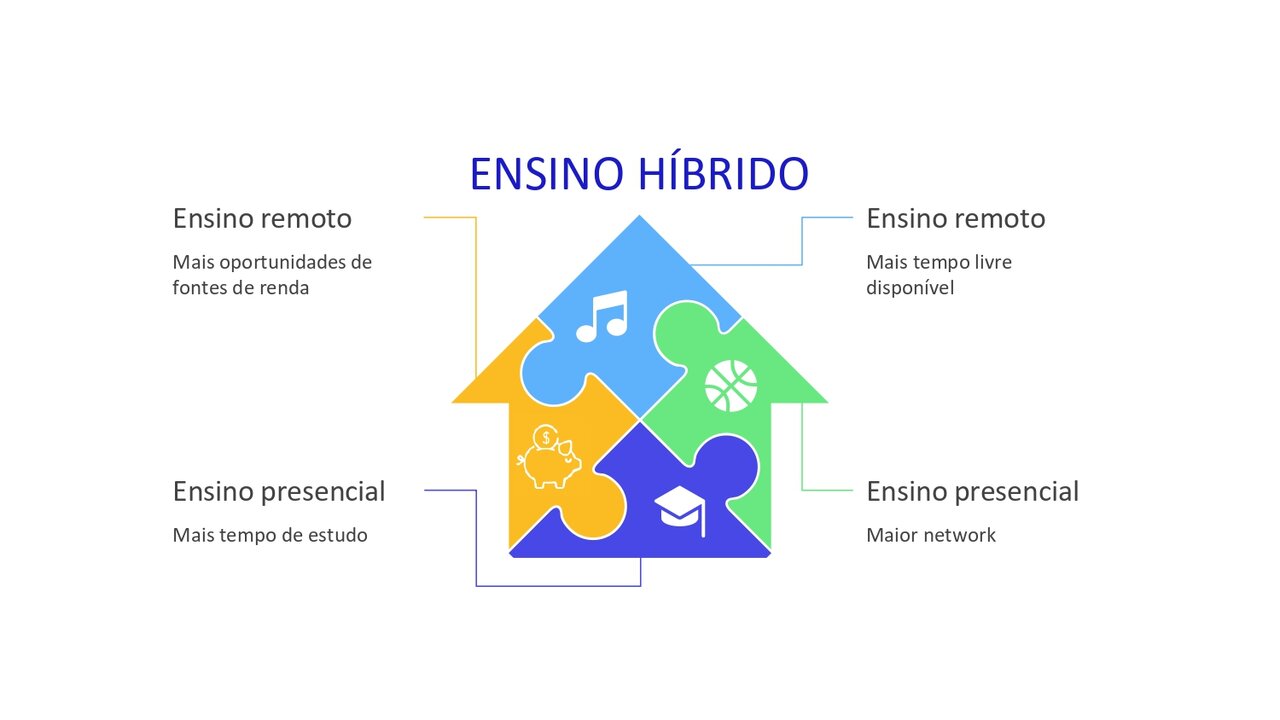
O presente artigo relata a percepção dos alunos dos cursos de engenharia ofertados por um dos campi de uma universidade, cuja sede é localizada no Norte do Paraná, quanto ao aprendizado e oportunidades nas modalidades de ensino presencial e remoto. Para a obtenção dos dados a serem analisados, foi realizado um estudo de caso exploratório e descritivo, com abordagem quantitativo-qualitativa, utilizando como técnica de coleta dos dados a aplicação de um questionário on-line. Concluiu-se que há a tendência por parte dos alunos em apoiar uma proposta de ensino híbrido, visto que aproximadamente 54,6% dos estudantes acreditam que essa modalidade é igual ou superior ao ensino presencial. Isso acontece, dado as vantagens e/ou desvantagens em ambos os tipos de ensino, como mais tempo de estudo no ensino presencial e mais oportunidades de fontes de renda no ensino remoto emergencial, que podem ser balanceados em uma metodologia híbrida. A título comparativo, 80,4% dos alunos acreditam que aprendem mais no ensino presencial, contra 19,6% do ensino remoto.
- Referências
-
Alves, A. R., Bazoli, T. N., Falkowiski, L. de S., Ciriaco, F., Manganotti, K. H., & Fernandes, R. K. (2018). Tutoria Ativa: A mediação como fator de engajamento do aluno ead da Unopar. Anais do Congresso Internacional ABED de Educação a Distância, Londrina, PR, Brasil. Recuperado de http://www.abed.org.br/congresso2018/anais/trabalhos/7447.pdf
Bacich, L., Tanzi, A. N., & Trevisani, F. de M. (2015). Ensino Híbrido: Personalização e tecnologia na educação. Porto Alegre: Penso.
Brasil (2005). Decreto Nº 5.622, de 19 de dezembro de 2005. Regulamento o art. 80 da lei nº 9.394, de 20 de dezembro de 1996, que estabelece as diretrizes e bases da educação nacional. Recuperado de http://www.planalto.gov.br/ccivil_03/_Ato2004-2006/2005/Decreto/D5622
Chritensen, C. M., Horn, M. B., & Staker, H. (2013). Ensino Híbrido: uma Educação Disruptiva? Uma introdução à teoria dos híbridos. Boston: Clayton Christensen Institute. Recuperado de https://porvir.org/wp-content/uploads/2014/08/PT_Is-K-12-blended-learning-disruptive-Final.pdf
Cunha, R. C. O. B., Pellegrini, P., & Ferreira, L. H. (2021). O que narram as professoras? Lições e aprendizados do ensino remoto emergencial. # Tear: Revista de Educação, Ciência e Tecnologia, 10(2). https://doi.org/10.35819/tear.v10.n2.a5398
Gil, A. C. (2002). Como elaborar projetos de pesquisa. 4 ed. São Paulo: Atlas.
Horn, M. B., Staker, H., & Christensen, C. (2015). Blended: Usando a inovação disruptiva para aprimorar a educação. Porto Alegre: Penso.
IBGE – Instituto Brasileiro de Geografia e Estatística. (2022). Inflação. Rio de Janeiro: IBGE. Recuperado de https://www.ibge.gov.br/explica/inflacao.php
Karpinski, J. A., Mouro, N. F. Del., Castro, M., de., & Lara, L. F. (2017). Fatores críticos para o sucesso de um curso em ead: a percepção dos acadêmicos. Avaliação: Revista da Avaliação da Educação Superior, 22(2), 440-457. http://dx.doi.org/10.1590/S1414-40772017000200010
Osman, M. E. (2020). Global impact of COVID-19 on education systems: the emergency remote teaching at Sultan Qaboos University. Journal of Education for Teaching, 46(4), 463-471. http://dx.doi.org/10.1080/02607476.2020.1802583
Premebida, E. A. (2021). Educação em (Des) Construção: uma abordagem sobre o uso do ensino remoto nas universidades brasileiras. Research, Society and Development, 10(1). http://dx.doi.org/10.33448/rsd-v10i1.12063
Souza, B. G., de., Estambasse, E. C., & Kanashiro, R. O. (2020). Um estudo sobre os interesses de alunos de engenharia mecânica na Modalidade ead: Estratégias pedagógicas de ensino. Série Educar, 16. Belo Horizonte: Poisson.
Souza, B. G. de., Estambasse, E. C., & Kanashiro, R. O., Oliveira, L. C. de. Jr. (2021). Cooperativismo na Educação a Distância: Uma nova proposta para o ensino. Revista Aproximação, 3(7). Recuperado de http://revistas.unicentro.br/index.php/aproximacao/issue/view/378
Teixeira, G. A. de M. e S., Lopes, A. M. B., & Bergmann, J. C. F. (2021). Análise do laboratório virtual de aprendizagem LabHidra.com aplicado ao ensino de hidráulica. #Tear: Revista de Educação Ciência e Tecnologia, Canoas, 10(2). https://doi.org/10.35819/tear.v10.n2.a5409
Thurab-Nkhosi, D., Maharaj, C., & Ramadhar, V. (2021). The impact of emergency remote teaching on a blended engineering course: perspectives and implications for the future. SN Social Sciences, 1(7), 1-19. http://dx.doi.org/10.1007/s43545-021-00172-z
Velasques, F. V., Soares, S. C. T., Luce, B., Bertagnolli, S. C., & Estabel, L. B. (2020). Ensino híbrido aplicado: Relato de experiência com estudantes de pós-graduação. #Tear: Revista de Educação Ciência e Tecnologia, 9(1), 12. http://doi.org/10.35819/tear.v9.n1.a3967
- Cover Image
-
- Downloads
- Publicado
- 23.10.2023
- Seção
- ENGENHARIA DE OPERAÇÕES E PROCESSOS DA PRODUÇÃO
- Licença
-
Direitos autorais (c) 2023 Lorena Mazia Enami, Bruna Gonçalves de Souza (Autor)

Este trabalho está licenciado sob uma licença Creative Commons Attribution 4.0 International License.
Qualquer pessoa pode copiar, distribuir, exibir, adaptar, remixar e até utilizar comercialmente os conteúdos publicados na revista; Desde que sejam atribuídos os devidos créditos aos autores e à BJPE como fonte original; Não é exigida permissão adicional para reutilização, desde que respeitados os termos da licença. Esta política está em conformidade com os princípios do acesso aberto, promovendo a ampla disseminação do conhecimento científico. 🔗 CC BY 4.0
